Silence in the face of evil is itself evil

By David Coltart

Bulawayo

27th July 2022

Dietrich Bonhoeffer wrote: “Silence in the face of evil is itself evil: God will not hold us guiltless. Not to speak is to speak. Not to act is to act.”

There is so much evil in #Zimbabwe at present. Innocent people are in prison and bail has been denied to them. Deeply corrupt people run scot free. Corruption perpetrated by an elite leadership abounds. Teacher Union leaders are detained for asking for a liveable wage. The justice system has been almost totally subverted. People are murdered and yet the murderers are not prosecuted. The political elite flaunt their extreme wealth and spending on luxuries like Rolls Royce vehicles when hundreds of thousands of children are out of school and millions are poverty stricken.

And yet in the face of such evil many Christian leaders are silent. Some Christian leaders even support the political elite and do their bidding. Some justify their positions, saying they are quietly influencing change, when no change is apparent, indeed as things worsen. This is what the Bible says about such conduct.

James 4:17

“So whoever knows the right thing to do and fails to do it, for him it is sin.”

Proverbs 8:13

“The fear of the Lord is hatred of evil. Pride and arrogance and the way of evil and perverted speech I hate.”

Ephesians 5:11

“Take no part in the unfruitful works of darkness, but instead expose them.”

Romans 12:21

“Do not be overcome by evil, but overcome evil with good.”

1 Corinthians 15:33

Do not be deceived: “Bad company ruins good morals.”

Habakkuk 1:13

“You who are of purer eyes than to see evil and cannot look at wrong, why do you idly look at traitors and remain silent when the wicked swallows up the man more righteous than he?”

Ephesians 5:11-12

“Have nothing to do with the fruitless deeds of darkness, but rather expose them.”

Psalm 94:16

“Who will rise up for me against the wicked? Who will stand for me against those who practice iniquity?”

Isaiah 5:20

“Woe to those who call evil good and good evil, who put darkness for light and light for darkness, who put bitter for sweet and sweet for bitter.”

Posted in Blog | Leave a comment

Zimbabwe would not have been this chaotic if Nkomo had remained alive longer: Coltart

CITE

By Brenda Lulu Harris

2nd July 2022

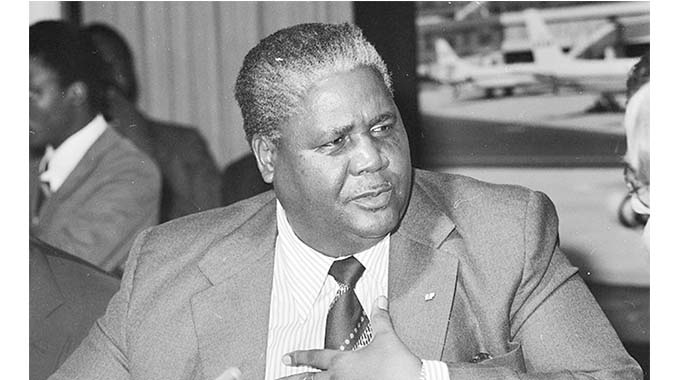
Senator David Coltart believes that if the late former Vice President, Dr Joshua Mqabuko Nkomo, had remained alive longer , Zimbabwe would have not degenerated to its current status, where political and socio-economic instability thrived.

The former education minister said Dr Nkomo would have sought to put ‘things’ in order, as he was a strong leader, who would not have allowed Zimbabwe to reach such chaotic circumstances.

“It is hard to imagine that he would have allowed the chaos that started after his death in 2000. He was a very strong man, always spoke his mind and one believes that he would have asserted his authority to make sure that courts were not undermined in the way they were and that violence did not visit us again,” said Coltart while sharing his experiences about Dr Nkomo in a Twitter space hosted by CITE on Friday, July 1 to commemorate his life.

“For such an icon, he was an incredibly humble man and I believe that his death in 1999 was a tragedy not just for his family, close friends and his political comrades but was a tragedy for the entire nation.”

Coltart remarked how Dr Nkomo always spoke out against violence, although he was a wartime leader.

“He spoke out against the violence in the 1980s and he was one of the greatest leaders of Zimbabwe. It’s important that we remember his values that he stood by and seek to reinject them in our body politic into Zimbabwe again,” he said.

The former education minister said the late vice president was a person of great integrity who remained humble despite his station.

“When Nkomo died, he died a relatively poor man. He didn’t live in a huge mansion but lived in a humble home and he kept that humility throughout his life,” Coltart said, praising how Dr Nkomo respected alternative views.

“Even in the late 1990s when our paths sort of crossed when he was in the Zanu PF government and I was critical of it, he never stopped treating me with respect. He never used harsh language against me.”

Coltart recalled that the first time he met the late nationalist was in 1976 at White City Stadium in Bulawayo and was enthused by him although he was a police officer for the white regime

“I have very fond memories of uMdala and they go back a long time. I was a young policeman and had just finished my training and came to Bulawayo. Nkomo was also in Bulawayo and I was part of the police who had to be present at his gathering. As you will appreciate, as a young white, I was trained and taught he was a fierce man, who whites should be scared of,” he said.

“We gathered with tens of thousands of people at White City Stadium and his home was in Pelandaba close by. I was 18 and in the midst of a sea of people. What struck me was the lack of antagonism Nkomo displayed and the calm way he spoke to people about the great trauma the country was facing then. He stressed that the fight was not against white people but against minority rule and oppression.”

Coltart claimed Nkomo’s words on freedom had a profound impression on him as they ran contrary to what he had heard about him before.

“I next saw Nkomo after independence when I trained as a lawyer in 1985. His brother Stephen Nkomo had been detained at Khami prison on spurious charges and in the course of representing Stephen Nkomo, I had to meet with Nkomo to get instruction, convey messages to his brother,” he narrated.

“Once again, what struck me was the kind man who actually understood that I was just a young white lawyer, thrown into a situation that had not been part of my training. Nkomo was kind to me and gave me a lot of attention. He also showed great compassion towards his brother and other senior ZAPU leaders who I was representing Edward Ndlovu, Sydney Malunga, Welshman Mabhena and others.”

The former education minister added that he also met Dr Nkomo at his business place, the Blue Lagoon, where he would be called to take instructions.

“Many ZAPU councillors had been detained in Lupane and he wanted me to represent them. Once again, although he was the senior national leader, he wasn’t haughty but showed respect and took me carefully through the legal instructions,” Coltart summed.

“Then of course, he went into government after the Unity Accord and on occasions in the 1990s, we continued to interact but he was always amazingly friendly and kind towards me.”

Posted in Blog | Leave a comment

The roots of Ukraine war: A rebuttal of Chando’s assertions

By David Coltart

Zimbabwe Independent

24th June 2022

In last week’s Zimbabwe Independent a writer describing himself as Jonathan Chando, a lawyer, wrote an opinion piece justifying Putin’s invasion of Ukraine. His article cannot be left unanswered. Aside from anything else, lawyers are trained to argue on the facts and the law, and Chando does neither.

It is simply, from start to finish, a crude rehash of Putin’s propaganda. But this is not just about the integrity of the legal profession, or the interests of the Ukrainian people, which is at stake. Although Zimbabwe has very little interest in Ukraine it is vital that we understand the conflict because it has profound implications for our politics and economy at home.

But let me first deal with Chando’s “facts” which underpin his argument that this is “Washington’s war against Russia”. The article is riddled with brazen untruths from start to finish. I will deal with four of them.

Chando insinuates that Ukrainian President Volodymyr Zelensky is US installed. He writes that the US installed “their handpicked Yatseniuk as interim president, who was to later be replaced by Petro Poroshenko following elections, and further by Volodymyr Zelensky.” The facts are that Zelensky won the first round of free and fair elections in Ukraine on March 31, 2019. In the second round, on April 21, 2019, he received 73% of the vote to Poroshenko’s 25%, and was elected President of Ukraine.

Zelensky wasn’t installed – he was democratically elected. If anyone doubts his popularity I encourage people to watch “Servant of the People” a Ukrainian TV satire in Russian with English subtitles which was first shown on Ukrainian television in 2015 (it is now on Netflix). Its themes of criticising corruption, the power of oligarchs, poor teachers’ salaries and misuse of State funds resonated with the Ukrainian people and it acted as the springboard to Zelensky’s election. He is no US puppet.

Chando repeats Putin’s propaganda that this is a war against Nazi Nationalists who somehow have taken over control of the Ukrainian government – he quotes Putin who stated that the aim of the “military operation” was “the denazification of Ukraine”. The fact that Zelensky himself is a Russian speaking Jewish man appears lost on Chando. The claim is patently absurd. The war itself has shown that Ukrainians themselves are deeply patriotic and determined to protect their own democracy. They have no desire for Ukraine to become another vassal fascist state like Lukanhesko’s Belarus.

Tied to this is the third falsehood sprouted by Chando – namely that Nazi Azov regiment has “unleashed terror on the eastern regions killing more than 14 000 civilians in the past few years”. Whilst it is true that at least 13 000 people have been killed in the armed conflict in eastern Ukraine, according to the latest report by the United Nations (through the Office of the United Nations High Commissioner for Human Rights) up to 13 200 people have died in the conflict until early 2020, of those, 3 350 were civilians and 5 650 insurgents, according to the UN.

It says that 4 100 of those killed were members of the Ukrainian military. Putin’s claim, repeated by Chando, that there has been what amounts to genocide in eastern Ukraine is brazenly false. I recommend a complete reading of the report to get the facts.

Finally, Chando’s regurgitation of Putin’s claim that there are “30 biological laboratories aimed at biological warfare against Russia and the people of Lugansk and Donetsk” is baseless. His claim that US Under Secretary Victoria Nuland has admitted that there are 46 biological laboratories is equally false and just a repeat of far right US commentator Tucker Carlson’s allegations which have been completely debunked.

The truth is that whilst there are labs, they study legitimate problems such as African swine fever (with the aim of preventing its spread in Ukraine) and tracing tularaemia and anthrax in animals such as wild boars. A kernel of truth has been deliberately twisted to suit a political end. In any event what any self respecting African commentator is doing, repeating right wing conspiracy theorists aligned to Donald Trump, is quite beyond me.

So much for the “facts” used in Chando’s article. But why is it important that Chando be challenged in this matter? Many argue that the war in Ukraine doesn’t affect Zimbabwe and is none of our business. Chando’s argument about Western double standards (exemplified in the US and Britain’s invasion of Iraq) resonates with many Africans. I contend that despite Western hypocrisy and double standards it is important that we understand the facts behind Putin’s invasion of Ukraine and its implications for Zimbabwe and Africa in general, for the following reasons.

War is evil

The underlying premise of Chando’s article is that the Ukrainian war is a necessary evil brought about by Western aggression. That notion feeds off our Zimbabwean experience. The intolerance, greed and arrogance of the Rhodesian Front regime, supported by the sentiments of a majority of white Rhodesians, led to the liberation struggle. That justified the taking up of arms and as a result war is still lauded in our country by many, and is a sentiment which is exploited by those who support Putin’s invasion of Ukraine.

However, aside from the fact that there are fundamental differences between the Ukrainian war and the Zimbabwean liberation struggle, this argument ignores the devastating consequences of war. In the 1950s Southern Rhodesia had an economy bigger than Singapore and South Korea.

Today our economy is a fraction of Singapore’s economy. The primary reason for that is the war our nation had to endure and the poison which has infected our body politic ever since. And that is a universal consequence of war. Hitler’s invasion of Poland in 1939 ultimately devastated Germany.

The US’s invasion of Iraq and Afghanistan in the last 20 years has destroyed infrastructure in both those countries and also contributed to the US’s massive debt burden. War has taken a terrible toll right across Africa in the last 50 years. In fact the only guaranteed consequences of war are that participating nations’ economies are trashed and that arms manufacturers profit.

Exactly the same is the consequence of Putin’s invasion of Ukraine. Not only have his forces flattened entire cities in Ukraine, but tens of thousands of lives have been lost and there are devastating consequences for the world’s economy. Fuel prices have rocketed and many nations now face severe food shortages. For all the attempts of the Russian ambassador to deflect blame for food shortages in the same edition of the Independent last week, the fact is that his country’s invasion of Ukraine has deeply exacerbated world food supplies. The war has had a significant impact on Zimbabwe itself.

The point is that war is evil; it should only be used as a last resort in defence of human rights. Putin’s actions are simply unjustifiable, even if the factual basis of Chando’s article was true, which as stated above they is not. There were other means of tackling the perceived threat to Russian security; but war was used as a first resort not a last resort. Zimbabweans need to be disabused of any notion that this war is justified or laudable in any respect.

Territorial integrity

Chando’s article correctly reflects Putin’s original stated objectives of the denazification and demilitarisation of Ukraine. When the war first started Putin’s intention was clearly to remove Zelensky from power and to turn Ukraine into another vassal State like Belarus. The Ukrainian defeat of Putin’s main objective to capture Kyiv has resulted in Putin focussing on a secondary objective, namely the occupation of a strip of territory adjacent to Russia and the Black Sea. It appears the purpose behind this is to consolidate Russia’s control over the Black Sea.

Whatever Putin’s objectives are, the fact remains that Ukraine is a sovereign independent State recognised by the United Nations. Whether Putin’s objective was to take over effective control of the entire country or merely to seize a portion of Ukraine, his actions have violated Ukraine’s territorial integrity. If that policy is allowed the consequences for world peace will be dramatic.

It will set a terrible precedent of might becoming right. If that policy is pursued in Africa it could result in endless wars on our continent. Imagine, for example, if the DRC was taken over by an efficient and powerful oligarchy which decided it wanted a land bridge to the Atlantic, and ethnic tensions were used to justify the invasion of Cabinda Province, which contributes 60% of Angola’s oil output? Closer to home, imagine if secessionist tensions in Matabeleland were used by a dominant South Africa as justification for invading Matabeleland with the real intention of securing Zambezi water or Zimbabweans gas fields? For this reason alone Putin’s invasion of Ukraine is indefensible. Indeed it is shocking that any African could seek to justify it.

War crimes

It is clear that war crimes are being committed in the Ukraine. Reputable media in the last few days have reported on an analysis of more than a thousand photographs taken recently which show that “Russia has used hundreds of weapons that are banned by international treaties and that kill, maim and destroy indiscriminately”. There are hundreds of credible reports of cities being carpet bombed into oblivion, of hospitals and schools being indiscriminately targeted along with civilians.

There are many credible reports of rape being used as weapon against Ukrainian women. The death toll so far has exacted a staggering toll in lives lost, thousands of them civilians. All of these are war crimes.

It is no good for us as Africans to complain about crimes against humanity committed on our own continent if we are going to turn a blind eye to war crimes being committed on a daily basis by Putin’s regime. Once again even if the factual basis argued by Chando was correct, that doesn’t justify the wholesale commission of war crimes or our deafening silence as Africans in failing to condemn these crimes.

Conventional wisdom in Zimbabwe is that the Zanu PF regime has modelled itself on China.

Given the long history between Zanu PF and the Chinese Communist party, China’s support of Zanla during the war and the substantial investment of China in certain infrastructure projects in Zimbabwe (such as the energy sector, the new Parliament and the Defence College) it is natural to assume that this is the case. But the reality is that since the coup of 2017 the Zanu PF regime has increasingly modelled itself on Putin’s regime, not the Chinese.

The hallmarks of the Putin regime are rampant corruption, a country run by obscenely wealthy oligarchs, the destruction of any semblance of an independent judiciary and a penchant for war. For all the undemocratic nature of the Communist Party these characteristics are not found in China. China regularly executes those found guilty of corruption; it remains a country where Western capital, including massive companies like Apple, still feel safe enough to invest in. China has not engaged in any foreign wars for decades.

In stark contrast, from Chechnya to Syria, Putin’s Russia has been involved in a string of wars since the fall of the Soviet Union in 1991. Russia, unlike China, has not invested in Africa’s infrastructure. In Zimbabwe Russia’s investments have been confined to the extractive mineral sector and Zimbabweans cannot point to a single large infrastructural project the Russians have financed for the benefit of the Zimbabwean people. Furthermore, unlike China, the Russian investment climate is toxic.

The book “Red Notice’ written by Bill Browder, the world renowned hedge fund manager who has campaigned to get justice following the murder of Russian lawyer Sergei Magnitsky, is a powerful expose of the reality of the Russian investment climate and the state of the Russian legal system.

Indeed Browder’s book should be required reading for Zimbabweans because as one reads it the similarities between the Putin regime and the Zanu PF regime become painfully apparent. Whilst the Zimbabwean economy and the power of the regime is minute compared to Russia, that is where the dissimilarities end. Zimbabwe’s economy is now effectively controlled by a handful of black and white oligarchs.

Corruption involving the same oligarchs has become endemic. The judiciary has been completely undermined; so called anti-corruption courts are now used to persecute political opponents. The Zimbabwe Anti Corruption Commission turns a blind eye to brazen and rampant acts of corruption committed by the political hierarchy and their oligarch supporters.

The Zimbabwean investment climate is also now toxic notwithstanding the rhetoric of the Zanu PF regime. The Zanu PF regime also has a penchant for war; its current leaders are the very same people who richly benefited from Zimbabwe’s involvement in the DRC war. The events of August 2018 and January 2019 are a reminder that this regime doesn’t hesitate in its use of the military to impose its will.

Ironically, as much as I deplore the undemocratic nature of China, if the Zanu PF regime actually modelled itself on China our economy would be in much better condition than it is now.

But it does not and shows no intention of doing so. Accordingly, aside from all the other flaws in Chando’s article, for this reason alone it is not in Zimbabwe’s national interest for us to support Putin’s actions. It follows that aside from human rights concerns, or international justice issues, if we as Zimbabweans want to promote international investment and resuscitate our economy then it is imperative that we distance ourselves from the Putin regime and its vile actions, not seek to justify it, or worst still associate ourselves with it.

Coltart is a lawyer and a politician.

Posted in Blog | Leave a comment

Zimbabwe hints at sending genocide fugitive Mengistu home to Ethiopia to face justice – but critics aren’t buying it

Is it just more Zanu-PF smoke-and-mirrors and deception? Some suggest it’s meant to deflect criticism that Zimbabwe is harbouring genocidal killers

 Former Ethiopian dictator Mengistu Haile Mariam at a welcoming ceremony on the eve of a non-aligned summit in Harare, Zimbabwe, in September 1986. (Photo: Alexander Joe and Dominique Faget / AFP)

By Peter Fabricius Follow

06 June 2022  

Daily Maverick

Is Ethiopia’s former brutal dictator, Mengistu Haile Mariam, about to be sent home at last, after three decades of asylum in Zimbabwe, to serve the rest of his life in jail for genocide?

This is the prospect Zimbabwe’s foreign minister, Frederick Shava, seems to have dangled. He told the Voice of America (VOA): “If the people of Ethiopia approach the government of Zimbabwe, appropriate steps will be taken by the government of Zimbabwe in response to the request, to the legitimate request from the government of Ethiopia.

Shava’s remark has sparked considerable interest and speculation about a possible radical about-turn in Zimbabwe’s policy. After long-time Ethiopian Emperor Haile Selassie was toppled in a military coup in 1974, Mengistu, an army colonel, then seized power in 1977 with the support of the All-Ethiopia Socialist Movement, a Marxist-Leninist group. He ruled Ethiopia with a bloody, iron fist as a one-party Marxist dictatorship until 1991, when he in turn was ousted.

He then fled to Zimbabwe, where his friend and fellow autocrat, President Robert Mugabe, gave him sanctuary and whence the ruling Zanu-PF has so far resisted all efforts to send him home to face justice.

In 2006, he was tried in absentia in Addis Ababa, found guilty of genocide and other charges after a 12-year trial and sentenced to life in prison. His main offence was directing the “Red Terror” in the late 1970s to try to eliminate his political opposition, mainly the Ethiopian People’s Revolutionary Party. Tens of thousands of opponents were killed or tortured.

But Mugabe still refused to send him back to face trial or serve his sentence.

https://www.dailymaverick.co.za/article/2022-01-17-getting-to-grips-with-ethiopias-ethnic-and-political-violence-is-vital-for-stability/embed/#?secret=AstCQ7qJUp#?secret=i7LVDuG3V8

Mugabe himself was ousted in a palace coup by Vice-President Emmerson Mnangagwa in November 2017, but he too showed no signs of surrendering Mengistu.

Now Shava’s surprising statement suggests that Mnangagwa’s position might be shifting.

But is it? Zimbabwe commentators are rather bemused but also sceptical.

“What you have to understand about the Mnangagwa regime is that it’s all about smoke and mirrors and deception,” says opposition politician and lawyer David Coltart.

He notes that the cheerful woollen scarf in national colours that Mnangagwa always wears on public occasions is “emblematic of what goes on in his government. It is literally sheep’s clothing on the wolf. In relation to Mengistu, it’s part of exactly the same strategy.”

He and other commentators believe Shava mentioned the vague possibility of extraditing Mengistu only to deflect criticism that Zimbabwe was harbouring genocidal killers. This was prompted by the International Residual Mechanism for Criminal Tribunals, which is still pursuing the leading perpetrators of the 1994 Rwandan genocide, recently discovering their most wanted suspect, Protais Mpiranya, had died in Zimbabwe at the age of 50 in 2006 and had been buried in Zimbabwe under a false tombstone.

Mengistu
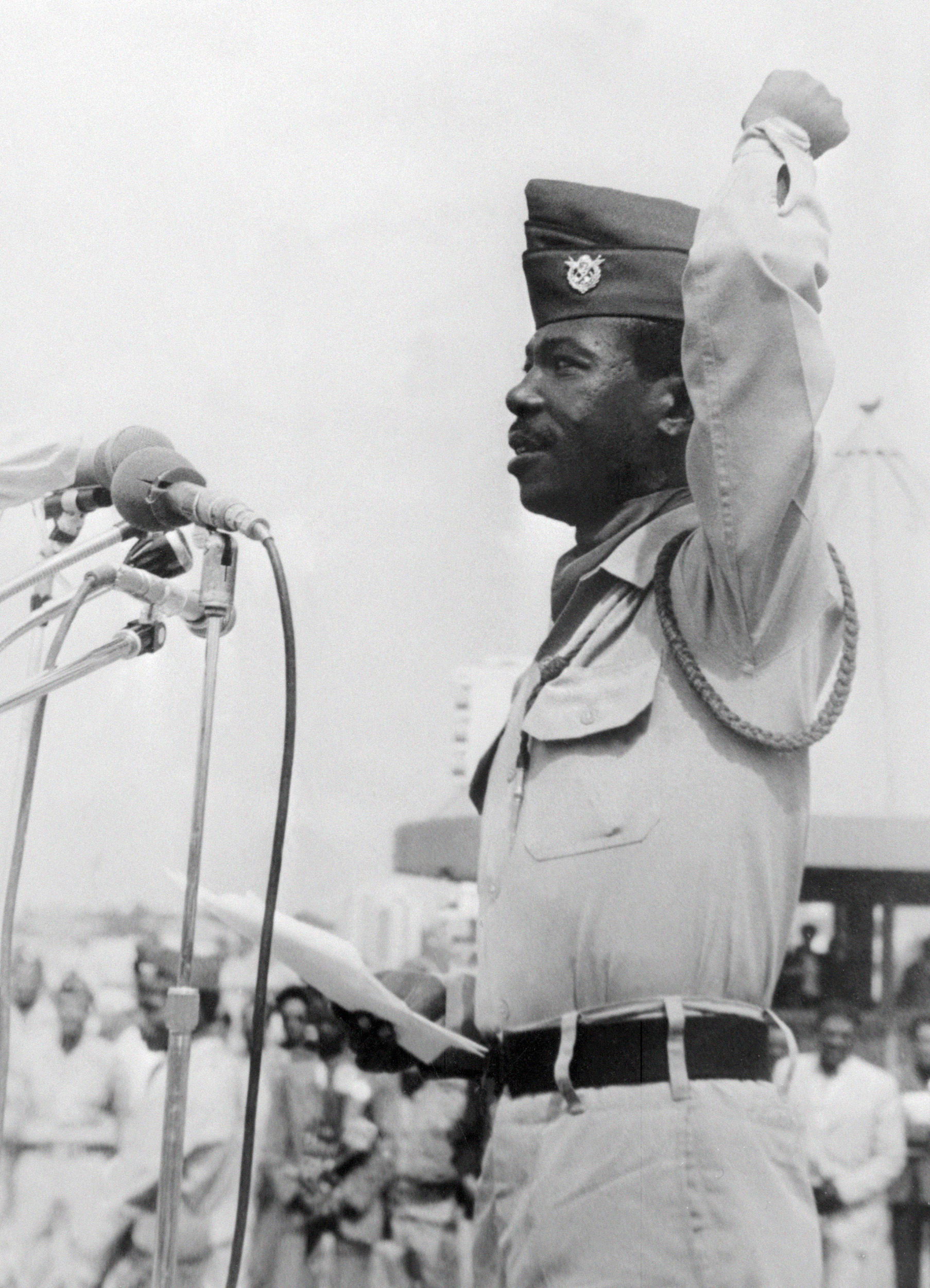
Ethiopian leader Mengistu Haile Mariam addresses supporters in Addis Ababa in May 1977. (Photo: AFP)

“They have been deeply embarrassed by the UN revelation,” Coltart said. “And Mengistu has been a guest of this country for decades. And so I think this is designed to try to deflect criticism… I would be very surprised if they released him. I think their intention is to deflect, let the dust settle and then they can get on with their lives”.

This interpretation is reinforced by the fact that Shava’s hint that his government might favourably consider an extradition request came in the context of questions by the VOA journalist about Mpiranya.

Shava denied any suggestion that Harare was a safe haven for genocide fugitives and insisted that his government had not been aware that Mpiranya had been in the country until the UN Mechanism found his body.

But DM168’s well-placed sources suggest it is highly unlikely the Zanu-PF government did not know Mpiranya was in Zimbabwe. They said they believed he had met military officers in the Democratic Republic of Congo in 1998 when both were engaged in repelling an attack on then president Laurent Kabila’s government by Rwanda. The Zimbabwean military officers had then invited him to settle in Zimbabwe.

Mengistu
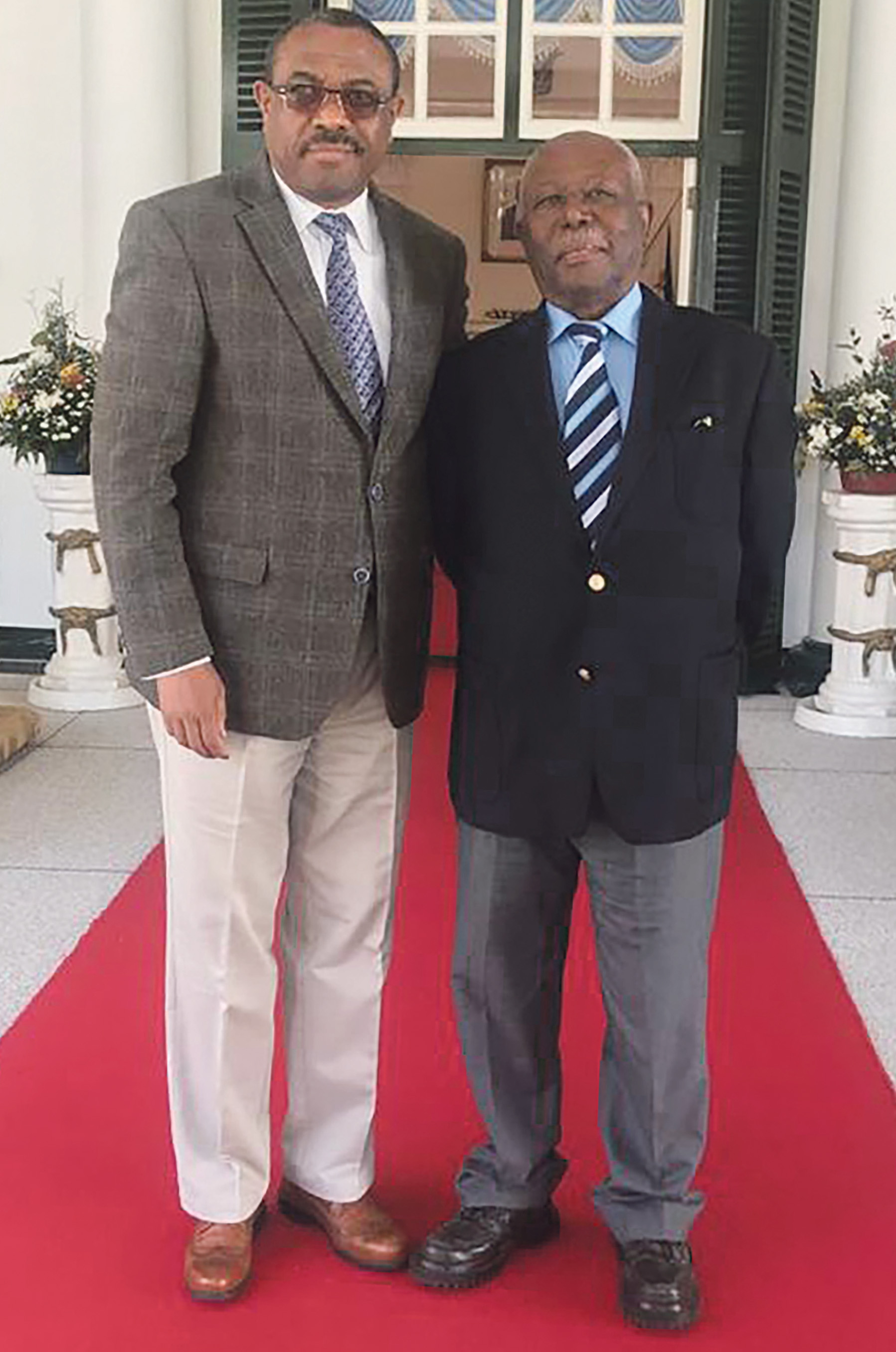
Just four months out of office, former Ethiopian prime minister Hailemariam Desalegn (left) had a strange meeting with Mengistu Haile Mariam in 2018 when Desalegn was heading the AU’s mission to observe the Zimbabwean elections. (Photo: Supplied)

Shava told VOA that Harare had “fully cooperated with the UN Residual Mechanism” in its investigation of Mpiranya. And it does seem true at least that after the Mechanism’s prosecutor, Serge Brammertz, had criticised Zimbabwe in the UN Security Council, Harare increased its cooperation. This might, though, have been part of Mnangagwa’s efforts to thaw relations with the international community in the hope that it would lift remaining sanctions on Zimbabwe.

In the end, Brammertz’s team discovered Mpiranya’s body by its own good sleuth work, including coming across the false name under which he had been buried, in a sketch of his tombstone on a computer.

https://www.dailymaverick.co.za/article/2022-06-02-pretoria-finally-helps-un-criminal-tribunal-track-down-rwanda-genocide-suspect-fulgence-kayishema/embed/#?secret=soz9MexIbx#?secret=rxyR8s9vhr

The same goal of winning international approval – or perhaps deflecting disapproval – might have motivated Shava to hint at a possible extradition of Mengistu. He told VOA: “We are not harbouring Mr Mengistu. We have allowed Mr Mengistu to stay in Zimbabwe since he fell out with his people in Ethiopia. It was not a conspiracy; everybody knew he was coming here with his family, and there is no comparison with what you are asking about [about Mpiranya].”

In Addis Ababa, however, there are doubts whether the government of Prime Minister Abiy Ahmed really wants Mengistu right now, since it is so preoccupied with its war against Tigrayan and other dissidents.

In 2018, former Ethiopian prime minister Hailemariam Desalegn had a strange meeting with Mengistu in Harare. Desalegn – just months out of office – was in Zimbabwe as head of the African Union’s mission observing Zimbabwe’s elections. His officials tweeted a picture of him with Mengistu without explaining what they had discussed in their meeting. DM168

Posted in Blog | Leave a comment

Reflections of the life of Noel Eric Boetie Mbokodo York

By David Coltart

Bulawayo 28th May 2022

It is a great honour for me to be asked by the family to speak today.  As we celebrate Boetie’s life and mourn his passing it is important that we reflect on his life and the principles he stood by so that we can learn from them and apply them in our own lives.

 I want to reflect on a few incidents which illustrate his character.

1982 DETENTION

In January 1982 Boetie and Alan were arrested separately on spurious charges that they had an arms cache on one of the family farms.  Boetie was arrested down in the Lowveld.  Alan was arrested at the family farm and taken to Khami Maximum Prison not knowing where Boet was.  He thought that he was alone and was put in the Maximum Section of the prison.  Every evening inmates had to strip down to take a shower and to do so were let out of their individual cells and went into a corridor which could be seen by others both in higher floors and below.  A few days after his arrest one evening Alan was in the nude and having had his shower was coming back to get his sadza before being put back into his cell.   Suddenly a voice boomed down from the floor above, “have you got a licence for that weapon!” As an aside having not been to Plumtree I had no idea Alan was so well endowed.

 Allan recounts how this suddenly transformed his gloom, his rock was there, there was no sympathy expressed by Boetie but through his humour it encouraged Allan and he had the first decent night’s sleep since his detention.

Boetie and Alan were discharged by the Courts but were warned that they would be re-detained.  Shortly after their discharge they met in their lawyer’s office and the late Strippy Goddard came to meet with them and told them that he had arranged for a flight for them to be able to leave the country immediately.  Boetie’s response was emphatic.  “We are not going to leave the country.  We will face the music”.  They went back to Fairview and had a huge party that evening only to be detained at 6.00 a.m. the following morning by the Police on a 90 day detention order.  They ended up in Chikurubi with Boetie being put in death row and Allan being put in the penal block. They were detained for a couple of months before being released again and on their way back to Bulawayo they were stopped at a Police roadblock outside Kwe Kwe and re-detained.  A police Superintendent had come down from Harare with handcuffs and leg irons to arrest them and transport them back to Harare.  Whilst they were being interviewed by the Superintendent in a Police office, Boetie refused to be handcuffed and pretended to lunge for an FN rifle which was in the room.  He said to the Superintendent “I could easily have grabbed this FN rifle which I am well used to, but I  didn’t and am not dangerous.  I refuse to go back in handcuffs and leg irons”.  The Superintendent relented. Then followed the curious spectacle of Boetie and Allan being driven back to Chikurubi by this solitary Superintendent with Boet in the front seat with the Superintendent and Alan in the back seat.

Their circumstances got even harder after that they were taken to Goromonzi Detention Centre which was designed as an Interrogation Centre with totally independent soundproof cells with no natural light.  They were in solitary confinement and the artificial light would be left on for 28 hours and left off for 6 without them being able to hear anything outside.  Boetie’s humour and determination never wavered. His insisted that they be given water and buckets to clean up the filthy cells.

From there they were transferred to Chikurubi again where Boetie ended up in a cell with Dumiso Dabengwa and Alan in a cell with Lookout Masuku.  During the months that they were together with Dabengwa and Masuku, they developed a close friendship.  The best story of this period is that Allan taught Masuku to play chess and Boetie taught Dabengwa to play chess but to their deep frustration within a week of them teaching Masuku and Dabengwa to play chess both Masuku and Dabengwa started thrashing the Yorks and it was no contest.

However, as a result of that common trial that Boet and Dabengwa went through they developed a close friendship.  It was a truly remarkable friendship given that they were both warriors and had fought on opposite sides.

Finally, after over 7 months of detention early on the morning of the 20th August 1982 Boetie and Allan were released from Chikurubi and taken to Mugabe’s office in the centre of Harare.  What they didn’t know is that their father, Eric, had managed to get in to see Mugabe.  Eric had told Mugabe that they needed to take their political hats off and as old men agree that his sons should be released, given that the Courts had acquitted them.  Eric, who was half blind at the time was persuasive and Mugabe agreed to release them.  Boetie and Allan were brought into Mugabe’s office where Eric and Mugabe were seated.  All Eric said when he saw the two of them was “you two”!.   

They had a short meeting and Mugabe said: “Let us put this matter to rest, you have asked for your boys, here they are, now take them home”.

One footnote – the day after they were released Police Figtree Member in-Charge brought all Boet’s firearms back to him.  Boetie said “but hey I am the arms cache guy.” For which the ZRP M/I/C said “you have never been taken off our list of reservists!” Such is Zimbabwe.

MATABELELAND DISTURBANCES

Boetie’s release from detention in August 1982 cast him into the vortex of the Gukurahundi which followed.  Despite all that he had suffered in prison he became the go-to-person for many farmers in the Matabeleland Region.  These farmers faced more trauma during this period from 1982 onwards than they had faced even in the 1970’s.  They often found themselves alone and defenceless.  Boetie became one of the principal-go-to people.  He was selfless and utterly brave.  He went on countless follow ups putting his life on the line in a most remarkable way.

PERSONAL REFLECTIONS

During the last 2 decades of political turmoil in Zimbabwe Boetie continued to demonstrate his deeply held principles, courage, bravery and thoughtfulness.  When Robert Mugabe threatened me and Catholic Commission for Justice and Peace Director, Mike Auret on television in 1999 saying that we were enemies of the State, it was Boetie who was the first person at my door to offer help.  A bit like Strippy Goddard had offered Boetie way back in 1982, he offered to get me out of the country as well.  Like Boetie I refused to go but I always knew that Boetie was one person I could turn to during the darkest days.  Boetie demonstrated similar support for many others.  On Independence Day in 2000 when Martin Olds home was surrounded it was Boetie once again who, with others of course, was most anxious to go to his assistance.  I met with him early that morning and remember how anguished Boetie was that Martin was surrounded and needed assistance.  

Jen had Boetie as one of two people on her speed dial knowing that he could be relied upon to help. When a determined effort was made in March 2003 to take me out it was Boetie who bravely broke the siege over the safe house were I was trapped.

Time does not allow me to recount all the other people he helped.  No doubt many of you here today have your own stories of how Boetie stood by you and helped you.  He was indeed a legend.

LAND

Any reflection on Boetie’s life would not be complete if mention was not made of his principled attitude towards his own assets.  At one stage E.R. York & Co. was arguably the largest single landowner in Zimbabwe.  E.R. York (Pvt) Limited at one stage had over 300 000 acres of land and ran over 30 000 head of cattle.   On his death Boetie was left with a few hundred acres. 

As so many other people have done, he could have used his wealth to buy his way back onto the land.  However, Boetie on principle was not prepared to do that.  Boetie believed that the manner of the Land Reform Programme was wrong and illegal, and that poor people had in particular suffered and so was not prepared to use his standing, his wealth, his contacts with Dabengwa and the likes to secure land just for himself.  Tied into that was the way Boetie lived his life.  As we all know he always just drove a bakkie.  He had no airs or pretentions. He was generous to a fault.

DEATH

I have been privileged to be able to speak and pray with Boetie over the last few months, in particular in the last few weeks as his life ebbed away.  What has struck me is that despite this illness, which he fought so bravely, he remained calm and at peace.  Even last Friday, 2 days before his death, the last time I saw him, the first thing he did on seeing me was to ask after my family.  As he faced so many battles and trials before in his life, so he faced this battle; always thinking of others, never complaining.  

LESSONS LEARNED

So, what do we learn from all of this?  What I take away is the following:

  1. Boetie was courageous in the face of tyranny and in the face of great trials.
  2. Boetie stood by the principles his parents and grandparents taught him and never to wavered from them.
  3. Boetie was thoughtful of others.  He was selfless and put others before his own interests.
  4. Boetie did all he could to use the strength of his position to encourage others, often using humour to do so.

Boetie did all of these things.  As we reflect on his memory, I hope it will encourage us all to aspire to higher standards in our own lives. 

A CLOSING THOUGHT

Boetie was always deeply committed to Zimbabwe.

If ever there was a genuine patriot, a genuine hero of Zimbabwe it was Boetie.  He had a deep belief in this country but believed that it would only reach its potential if we returned the country to the principles that he tried to live his own life by.  My hope is that his life will inspire us to emulate him in future so that his vision for a new bright dawn in Zimbabwe can ultimately be attained.

I would be grateful if you would all stand briefly to honour Boetie and reflect on what he stood for.

Hamba Kahle Boetie.

Posted in Blog | Leave a comment

Govt urged to address crisis in education sector

Newsday

25th January 2022

BY CATHERINE MUCHIRI

STAKEHOLDERS in the education sector have called on government to address the multi-pronged crisis in the sector amid reports that 1,5 million learners have dropped out of school due to poverty and the COVID-19 pandemic-induced lockdown.

The call came as the world yesterday commemorated International Day of Education.

The United Nations set aside January 24 as the International Day of Education. This year, it was commemorated under the theme Changing Course, Transforming Education to strengthen and welcome the revival of education in a gap hugely felt due to COVID-19.

Former Primary and Secondary Education minister David Coltart said the commemorations came at a time when the country’s education sector was facing its worst crisis.

“The children are facing a complete catastrophe and the education system is underfunded, while the country’s teachers are disrespected. The government should work more to improve the sector by allocating it more funds,” he said.

“It should also make the profession attractive to younger people by increasing teachers’ wages and respecting them. The government should allow the spirit of dialogue between them and the teachers unions in order to reach consensus. The teachers should be encouraged, not threatened, and their teaching conditions must be improved in order to motivate them to be at their best.”

Amalgamated Rural Teachers Union in Zimbabwe president Obert Masaraure said his organisation had launched the Save our Education campaign to push for revival of the education sector.

“We are calling for a fully-funded basic education system as between seven million and nine million people in the country live in extreme poverty and cannot be expected to fully afford paying school fees and to buy learning materials,” he said.

“In Bulawayo province alone, 60% of learners have dropped out of school due to this issue. In Zimbabwe, 1,5 million children are out of school, while 12% don’t complete primary education, and 27% don’t complete O Level and 87% don’t finish A Level.”

In 2020, a Zimbabwe National Statistics Agency report said 59,1% of the schoolgoing population dropped out of school in Bulawayo, 55,4% in Mashonaland West, 47,2% in Manicaland, 48,2% in Masvingo, 35,3% in Mashonaland West, 36,4% in Mashonaland Central, and 40,5% in the Midlands.

Masaraure appealed to government to provide education recovery grants to schools to benefit underprivileged pupils.

Posted in Blog | Leave a comment

The many silences of Heath Streak

His love for cricket and Zimbabwe drew him back to both time and again. It would also be his undoing

BY FIRDOSE MOONDA  

www.thecricketmonthly.com

 JANUARY 12, 2022

Heath Streak had never heard a silence so loud. It was March 2018 and Zimbabwe had failed to qualify for the 2019 World Cup. Missing out was a matter of both pride and money.

It would be the first time in Zimbabwe’s history that they would not be at the tournament. It doesn’t matter that they have never been expected to win; World Cups are a rare chance for them to test themselves against the best – and occasionally to beat them. It is also one of the few opportunities to add to Zimbabwe Cricket’s bank balance, which otherwise runs close to empty in a flailing economy. For the World Cup, the participation fee was US$100,000 and for every match won, teams earned an extra $40,000. Zimbabwe could have lost every match they played and still returned home with enough money to, for example, pay the salaries of the coaching staff for a year.

Streak, who was head coach at the time, and his support staff, which included Lance Klusener (batting), Douglas Hondo (bowling), Walter Chawaguta (fielding), Stanley Chiwoza (analyst) and Sean Bell (strength and conditioning), voluntarily gave up their salaries for more than a year leading in to the qualifiers, in an attempt to mitigate against pay cuts for players. They figured that if the cricketers were not worrying entirely about money – there was still some concern because they were on reduced pay – they would be able to fully focus on their performance. If that happened, Zimbabwe would give themselves the best chance of qualifying, and if that happened, everyone would eventually get back what was owed to them. The incentive to get there was strong. Even though there were a lot of ifs, it was a reasonable plan; it could even be viewed as a case of deferred payments. In reality, it backfired badly.

“It was just really terrible when we realised we would not qualify, especially because it had been a tough tournament in so many ways,” Streak says from his home in Bulawayo in June 2021. “There was no DRS and we had a horrendous decision against West Indies: [Sikandar] Raza was bowled off a no-ball. That defeat made it difficult for us, but we weren’t the only team to struggle without the reviews. Scotland were also on the receiving end of a few bad decisions.

“Then we got to playing against the UAE. They scored 235, which was going to be tough to chase anyway. There was a major storm at lunch and our target was revised to 230 from 40 overs. The ball was swinging and it was tough batting and we fell short. We just couldn’t believe it. Afterwards, in the change room, it was the longest bit of silence I’ve heard.”

A week later, Streak and his entire staff were sacked, in what he claimed were unfair dismissals. “When I was hired, one of the things that came up in my interview was how I would be judged. I asked how the board would deem success because I needed what I was asked to do to be realistic and achievable.Before Streak and his coaching staff were dismissed in 2018, Zimbabwe's win percentage under them had climbed to 37.5% in a year and a half, from 22.6% before then

Before Streak and his coaching staff were dismissed in 2018, Zimbabwe’s win percentage under them had climbed to 37.5% in a year and a half, from 22.6% before then © Getty Images

“Zimbabwe had a 20% win ratio in the two years before I took over, and I was told that if I could double that, it would be unbelievable. Most top teams work on a win ratio of 50-60%”

Streak was hired in October 2016, and took over from Makhaya Ntini, who served in an interim role after Dav Whatmore was sacked that June. According to Streak, the ZC board chair, Tavengwa Mukuhlani, and the managing director, Faisal Hasnain, did not specify any other performance criteria.

“We also spoke about the World Cup qualifiers and we understood that the World Cup had moved from 14 to ten teams and that there would be some really good teams in the qualifiers, but there was never a stipulation of qualification being the requirement to continue. Up to the World Cup qualifiers, our win percentage was 37 and we won an ODI series in Sri Lanka after 17 years, so I felt I had done what was expected of me.”

Still, Hasnain sent Streak an email on a Friday at the end of that March, giving him and his staff an ultimatum to resign by 3pm that day or be sacked. Hasnain himself resigned less than a month later, citing the team’s inability to qualify for the World Cup. By then, Streak had launched a court case against ZC, demanded the board be dissolved to pay debts, including the money he was owed, and lodged a defamation claim against Mukuhlani, who had accused Streak of being a racist. Although it was the last of those allegations that stung Streak the most, it transpired that the absence of funds was also a significant issue. Three years later, he would be banned for eight years after admitting to accepting two bitcoins worth $70,000 and an iPhone from a man the ICC recognised as a corruptor, and multiple breaches of the ICC’s anti-corruption code. Streak said he had provided information on, among other tournaments, the 2018 Afghanistan Premier League, which took place six months after the World Cup qualifiers. By then, he was without permanent employment, still unpaid by his former employers and embroiled in legal proceedings against them.

Streak hasn’t said it and neither has anyone else, but it’s not difficult to see a connection between the dysfunction of this last coaching stint and his transgressions thereafter, which have not only scarred his reputation but also changed the nature of his relationship with cricket.

How did it come to this? Had it been building from back in 2004, when he stepped down as captain of Zimbabwe and walked out amid a transformation storm, only to return a year later? Or were the roots laid a decade later, when Streak was overlooked in succeeding Alan Butcher as the men’s head coach, despite a successful tenure under Butcher as bowling coach? Was it because he was then compelled to take temporary posts and start an academy in Bulawayo, rather than, as many of his contemporaries had done, look for more permanent employment abroad? And, most complicatedly, did it get to this point because of his devotion to the land of his birth and the soil of his soul?Swapping turf for surf in happier times, in Sydney in 1994

Swapping turf for surf in happier times, in Sydney in 1994 Tim Clayton / © Fairfax Media/Getty Images

Streak is fluent in Ndebele, the language spoken by nearly four million people, mostly black Africans across Zimbabwe, South Africa and Botswana. That may not seem like a remarkable thing to say about a Zimbabwean, even a white Zimbabwean, but it is. It’s not just that Streak can speak and listen, or ask and answer but he is fully fluent in the language. He jokes in Ndebele and knows its nuances.

He is unusual, says Chris Mpofu, because he speaks Ndebele more than he does English. “When we [the team] would go to his farm, we would find him speaking Ndebele to his dad,” says Mpofu, who played five internationals alongside Streak in 2005 and was coached by him. “It was actually pleasing to see white people love something that is part of us and our culture.”

Streak’s paternal great-grandfather, originally from England, bought land in the Turk Mine area, 60 kilometres north of Bulawayo, in 1896. Over four generations, the Streaks’ have farmed cattle and founded a safari company, with zebra, wildebeest, kudu and giraffe roaming their terrain. As white people on African soil, the Streaks recognise the privilege they hold in their title deed and the fact that most of Zimbabwe’s majority black African population do not own any land at all.

That’s a legacy of the country’s colonial past, but things have changed over the last 40-odd years. The war of liberation that led to independence in 1980 brought Robert Mugabe to power as Zimbabwe’s first black president. Initially he led over some of the country’s most fruitful years, which saw it prosper agriculturally (Zimbabwe was once known as “the breadbasket of Africa”). Eventually, though, Mugabe also oversaw the country’s decline, as he slowly transformed into a cruel despot. Under him, in 2000, the government introduced its first land-reform programme to appropriate white-owned farmland and redistribute it among the black population. The Streaks’ farm was among those affected. More than 70% of their land was seized, and though the family protested initially, they have since come to reflect on their own positions and accept that some of their wealth had to be given up.

“We had some of our land taken but we were still left with some,” Streak says. “I believe we are very lucky to have a farm, so we will just crack on with what we have left. My dad and I are very committed to the farm and community.”

There remain some cattle, a safari park, and a primary school that the Streaks built with the help of some donors from New Zealand.

Denis Streak is 72, played 14 first-class matches for Rhodesia, and currently represents Zimbabwe in lawn bowls. He continues to take care of much of the day-to-day running of the farm, in circumstances that vary in the degrees of difficulty they impose. For the last two decades, Zimbabwe’s economy has been ravaged by hyperinflation and economic sanctions. In the last 20 months, the coronavirus pandemic has further depleted what little foreign currency was coming in. “Things are tough,” the younger Streak admits. “It’s really not easy. With Covid-19, tourism has been almost non-existent.”Home-town hero: Streak greets fans in Bulawayo in 2004

Home-town hero: Streak greets fans in Bulawayo in 2004 Clive Rose / © Getty Images

Streak, though, is famously apolitical. He’s not going to blame the post-independence regimes of Mugabe, and now Emmerson Mnangagwa, for the country’s struggles. He played no part in Andy Flower and Henry Olonga’s black-armband protest against the death of democracy at the 2003 World Cup, and didn’t even know of their intentions until the morning of the match, when the game had already begun.

In an interview to the Independent that same summer, when he was leading Zimbabwe on a tour of England, Streak maintained that sport and politics should not mix.

“I do have opinions, and I have been affected both politically and economically by what is going on,” he said in that interview. “But I don’t think it’s a good idea to make a big song and dance over cricket because of what is happening politically. People may not like that, but it doesn’t mean I’m insensitive to the issues. And I know that there are a lot of people in my country who only have cricket to look forward to. They like seeing the national team playing against England or Australia. It gives them pride in their country, and they get some relief from watching sport.”

It was a remarkable line, given the history of his own team and country, and the stance doesn’t seem to have changed since.

Streak could be accused of simply being naïve. Critics might argue his is a perspective born of white privilege, that he is able to ignore the politics in the personal. Or it could be a strategic pose, the fine line Streak walks between cricket and the corridors of power.

David Coltart, Zimbabwe’s former sports minister and a close friend of Streak’s, says there is no basis for this latter speculation. “He is not political at all. He would never think of running for office, for example,” Coltart says. “But he wants to get the job done and realised that to get the job done, he had to have people on both sides.”

Coltart speaks of Streak’s ability to connect “people who loved cricket but also people who are politically connected”, though he notes that Streak’s straddling of those divides extends further than that.

“The most important thing about Streak, and it sets him apart from every other white player in Zimbabwe, is his ability to span the racial, and to a lesser extent the ethnic, divide [between the Ndebele and Shona tribes – Zimbabwe’s two largest indigenous groups]. He is fluent in Ndebele. That has been a huge benefit for him. It’s not just that he is fluent but he understands Ndebele culture and it’s given him a remarkable opportunity to reach out to black players in particular. To that extent, he has been one of the greatest unifiers.

“You know, if you get a group of white men together in a change room, when they don’t have to be politically correct, you quickly get to understand who the real racists are. Heath is not a racist. Look at his ideas around land [on losing land in the reforms].No one has taken even half as many Test wickets for Zimbabwe as Streak, who finished with 216 from 65 matches

No one has taken even half as many Test wickets for Zimbabwe as Streak, who finished with 216 from 65 matches Stu Forster / © Getty Images

“He exudes warmth, and through that, he has managed to reach out, particularly to black and other minority players in a way that, with the best intentions in the world, someone like Andy Flower or Grant Flower was never able to do.”

Mpofu is a good example. He was still a schoolboy when he met Streak in 1999. He had always admired Streak, and in 2003, when he bowled to the national team in the nets, he got to know Streak better. It was an interesting time for the two to be forming a bond, not least because Zimbabwe cricket was pulling apart at the seams, along racial lines.

Although plans to push affirmative action had been afoot since Zimbabwe gained independence, they only really crept into cricket in the late 1990s. In his paper “No-ball! When Transformation, Indigenization and Politicking Overstepped Into Zimbabwean Cricket”, independent researcher and academic Admire Thonje, who works on social issues in Zimbabwe, argues that former ZC chair Peter Chingoka and former managing director Ozias Bvute were “partisan officials” who drove transformation but believed their methods were motivated by a particular political agenda. Although Thonje recognises that because the racial mix in Zimbabwe’s national cricket side had hardly changed from its all-white composition between 1982 and 1999, which made affirmative action necessary, he concludes that Chingoka and Bvute’s methods were “problematic,” that they divided players into two camps, for and against inclusion. Streak, these administrators decided, fell into the latter category because he expressed serious concerns with the running of Zimbabwe cricket – those concerns, however, were about the dysfunctional nature of the board rather than being racially motivated.

On April 2, 2004, reports emerged that Streak had threatened to resign as captain unless ZC met certain demands, including a review of the national selection panel. By April 4, it was unclear whether Streak had stepped down or been sacked, and what followed were ten days of high drama. Denis Streak denied that Streak gave ZC an ultimatum, ZC claimed Streak had retired, and replaced him as captain with Tatenda Taibu. Denis then hit back with an accusation that ZC had unlawfully terminated Streak’s contract. On April 14, 2004, 13 Zimbabwe players, all white, including Streak, issued a lengthy statement, explaining why they were effectively walking away from Zimbabwe cricket. Later that month Zimbabwe hosted Sri Lanka. Taibu captained, and in the third ODI the side was bowled out for 35. If Streak needed a sign that he need not look back, this was it.

Cricket in Zimbabwe was in free fall with the exodus of white players and their experience, leaving behind a gap that was filled by poor results and prejudice. Most who left had access to, or had already obtained, British passports and could end their careers on the county circuit. That option was open to Streak too, and he signed a deal with Warwickshire, where he took 13 for 158 on debut, won the county title in his maiden season, and returned for three more years.Chris Mpofu (right) on what made Streak unusual:

Chris Mpofu (right) on what made Streak unusual: “We would find him speaking Ndebele to his dad. It was pleasing to see white people love something that is part of us and our culture” Lakruwan Wanniarachchi / © AFP/Getty Images

And yet that life wasn’t enough for him.

He returned to Zimbabwe less than a year later. None of the others who left with him came back, which says as much about how they had moved on with their lives as it does about Streak having not done so. Willingly, though a wealth of other opportunities was available to him, he chose to play for the demoralised national side; a team that had been hollowed-out, stripped of its core, and one that would spend most of the next decade trying to rebuild. That was the team Mpofu made his debut in.

Streak played the final ODI in a series Zimbabwe had already lost, and the only ODI he and Mpofu would play in together. “It was in Port Elizabeth and I had never been to a place that windy,” Mpofu remembers. “We opened the bowling together and I was bowling into the wind and it was blowing me backwards. Streaky said we should switch ends because he was a heavy guy and could push the wind away.”

When Deepak Agarwal, identified as Mr X by the ICC in various anti-corruption cases over the last few years, first made contact with Streak in September 2017, he did so under the pretence of wanting to start a T20 league in Zimbabwe. He asked if Streak would be interested in a joint business venture. As it happens, Streak had been thinking of a T20 league for Zimbabwe for years, and he jumped at the chance.

“There hadn’t been any form of T20 tournament in Zimbabwe for over three years, which is actually a stipulation by ICC for countries to access full funding,” Streak says. “I ran a T20 competition at my academy in Bulawayo, which drew in some Harare guys, but we wanted something bigger. We didn’t necessarily want it to be the same as the IPL, BPL or CPL but something that would have allowed domestic players to be seen and play alongside emerging international players. And it could have made ZC and Zimbabwean players money in the right environment”

For a short period in the years leading up to that offer, the environment looked right. In the first half of the 2010s, the country and its cricket went through a wave of relative stability. The 2008-09 power-sharing agreement between Mugabe’s ZANU PF and the opposition Movement for Democratic Change, led by Morgan Tsvangirai, promised, if not democracy, then stability. One of the key features of these years was the dollarisation of the Zimbabwean economy, which, in short, meant slightly more money, which meant slightly more opportunity for everyone, including ZC.Tatenda Taibu (right) was instated as captain in 2004, after Streak led a rebellion against Zimbabwe Cricket

Tatenda Taibu (right) was instated as captain in 2004, after Streak led a rebellion against Zimbabwe Cricket Hamish Blair / © Getty Images

In August 2009, Streak was appointed Zimbabwe’s bowling coach and was thought to be the preferred candidate to take over the main job. But in February 2010, ZC appointed Alan Butcher, with Streak remaining in his role. As Zimbabwe prepared to end their self-imposed isolation from Test cricket and further professionalise the domestic game, this constituted what ESPNcricinfo called, at the time, a “sense of normality”.

The next year was a marquee one for Zimbabwe. Although they had a poor World Cup, in August that year they enjoyed a successful return to the longest format with victory over Bangladesh at home. They hosted Pakistan and New Zealand in an unusually busy home summer. Later that season, ZC secured the services of Chris Gayle, Shaun Tait, Ryan ten Doeschate and Dirk Nannes for their T20 domestic league, sponsored by Stanbic Bank.

However, the corporate backing didn’t last long. Stanbic Bank pulled out after the 2011-12 season, an early sign that things were not all that normal; the next season the tournament ran unsponsored, and the season after, it wasn’t played at all. Since then Zimbabwe has only staged a T20 competition three times. This is the landscape Streak believed had to change.

First, he found himself on the outside again when his contract wasn’t renewed after Butcher’s tenure ended. He headed to Bangladesh, where he worked for a while as bowling coach. But as before, he didn’t feel entirely satisfied unless he was doing something in Zimbabwe, and so he used his downtime in 2014 to set up what would, were it not for the revelations of 2021, come to be seen as his most enduring legacy.

The Heath Streak Cricket Academy in Bulawayo is Streak’s love letter to Zimbabwe, a top-class facility, aimed at developing talented cricketers and ensuring the national talent pool spreads outside the capital, Harare. He set it up in a tough financial environment, Zimbabwe being a forbidding place for investors, using his own money and some fundraising, including with government backing.

The academy is controlled by a trust that includes people on either side of the political divide. “The composition of the trust is fascinating,” says Coltart, who is part of the body. “He was at pains to include me. There’s also a ZANU-PF MP and another person who is very close to [current president] Mnangagwa. As I said, Heath knows how Zimbabwe works and has always been a bridge builder.”

Despite this reputation and the fact that he had set up an academy, Streak continued to be overlooked for jobs with the national team, as they cycled through Andy Waller, Whatmore, Stephen Mangongo and Ntini as head coaches. All the while, Zimbabwe’s results got worse. Among the lowlights in that time was losing all eight matches on a tour to Bangladesh in 2014, losing home and away ODI and T20 series to Afghanistan, and losing players, most notably Brendan Taylor and Kyle Jarvis to Kolpak deals.Streak worked with Gujarat Lions and Kolkata Knight Riders as bowling coach in the IPL between 2016 and 2018

Streak worked with Gujarat Lions and Kolkata Knight Riders as bowling coach in the IPL between 2016 and 2018 Prashant Bhoot / © BCCI

Eventually, after more administrative mishaps, they did circle back to Streak. He was appointed national coach in October 2016 on generous terms. He was also allowed to continue working as bowling coach of Gujarat Lions in the IPL and to take on other short-term deals, ZC perhaps safe in the knowledge that Streak would – could – never be away for too long.

There was still no T20 tournament in Zimbabwe when he took over, and not one by 2019, after Streak had been sacked. That was the year he started work on a business proposal with Agarwal.

“We were going to call it the Safari Blast, and look at playing it in the window just before the IPL,” Streak says. “It would give players who wanted to get match-ready for the IPL that opportunity and would work well as pre-season time for the England summer. We pitched it to the then-CEO, Faisal Hasnain, and presented something to ZC.”

According to the ICC’s investigation, at this time Agarwal also made it clear to Streak that he was “involved in betting on cricket”, and requested Streak’s bank details. Streak makes no mention of this critical bit of information, and as he did to the ICC, reiterates simply that he “made it clear in these discussions that he wanted to establish a T20 League in Zimbabwe and was passionate about furthering cricket in Zimbabwe”.

Herein is the crux of the case against Streak: the relationship he formed with Agarwal and his subsequent breaches of the ICC’s anti-corruption code. That, although there can be little doubt about the nature of Streak’s transgressions and the motivations that drove them, it is possible to believe that at some level inside, he was also driven by a genuine desire to better the game in Zimbabwe; that he really did believe Zimbabwe needed a T20 league and that he was going to help set it up.

Unlike so many former Zimbabwe players, Streak never left. Each time he could have walked away, he came back. If he was a mediocre player, you might say he had no other option. Yet he stayed back and eventually – cruelly, perhaps – that decision led to his downfall. This isn’t to absolve him; just that as an irony, it is difficult to ignore.

Over the next year the Safari Blast project stalled but Streak’s communication with Agarwal did not. The ICC’s investigation found that Agarwal contacted Streak during the 2017 BPL for contact details of team captains, owners and players in that league. Though Streak was not coaching in the BPL, he had previously worked as Bangladesh’s bowling coach and was well acquainted with their players. Agarwal promised Streak they could “earn good money as a result of which they could invest in a T20 event in Zimbabwe”. Streak provided the details of three players, including a national captain, and the ICC’s decision found that Streak “knew or should have known that Mr X [Agarwal] may use these details to contact these players and request Inside Information from them for him to use for betting purposes”.Streak provided

Streak provided “known corruptor” Deepak Agarwal (not in picture) contacts for Bangladesh players, whom Streak knew from his stint as the team’s bowling coach between 2016 and 2018 Morne De Klerk / © ICC/Getty Images

Streak says he made a mistake and puts it down to naivete.

“I was overly trusting. There’s a lot of things that you might say to your wife or your dad, and if they were a gambling people, they could do some of those things. I should have been a lot more conscientious [about] what we are privy to, and that we have information that can be used. This is the sad reality of professional sport. People gamble on sport and it’s big business. Everyone is trying to get any edge they can.”

Agarwal’s attempts to get an edge continued for another year. He asked for player references for the 2018 PSL and the 2018 Afghanistan Premier League (APL). Most damningly, in return, Streak accepted two bitcoins worth $35,000 each and an iPhone, as gifts. By December 2018, the ICC’s Anti-Corruption Unit had been in contact with Streak and notified him he would be required to attend an interview. The ICC found that Streak and Agarwal had coordinated on what they should say in this interview.

All put together, the trail of the case and the sheer weight of evidence against Streak blows holes through a defence of naivete, or that he was simply too gullible and that a corruptor took advantage of his eagerness to start a league. There is enough to show that Streak must have known more about Agarwal and his intentions than he has let on, and that he was, ultimately, complicit.

It took another two and a half years for the ICC to complete their investigation and impose an eight-year ban on Streak. That, he reckons, is as good as a life ban.

“In eight years I will be 55 and I think it will be difficult to get back into coaching at elite level then.”

Streak is now dealing with fallout that unfolds in multiple layers.

“A lot of people understand that I was abused by someone who had taken advantage of me,” he says, continuing to play the victim. “But there are people who I thought would reach out, even to express disappointment, who haven’t. So this has shown me who my true friends are. It’s been character-building and enlightening. I can’t think of anyone who has said to me directly that I am an idiot.”

Coltart says so, if in words not so blunt. “I was disappointed in Heath. It was a serious lapse of judgement. He should have known better. He should have realised that this was very dangerous territory.

“I was disappointed for him because it has severely undermined his credibility, and he is a man I respect. You don’t care too much when a scoundrel is caught out but that doesn’t apply to Heath.”

Outright nasty things have been said elsewhere. “One article equated me to Hansie [Cronje] and that was hurtful,” Streak says. “I didn’t do anything that affected the result of any part of any game. If I was helping somebody by saying I’d get my bowler to bowl a wide, then I can influence the match and that would be asking a guy to underperform. I never did that. In fact, I would happily do a polygraph to prove my innocence. Possibly something others should be forced to do, like the great Steve Waugh once suggested.”At the family farm in 1996. Streak has returned to running the farm and fishing since his 2021 ban

At the family farm in 1996. Streak has returned to running the farm and fishing since his 2021 ban Chris Turvey / © PA Photos/Getty Images

Zimbabwe Cricket, with Mukuhlani still as its chair, responded to news of Streak’s ban with thinly veiled glee. The statement the board sent out on the day Streak’s sanction was announced said it was “an episode that may well go down as the darkest day in Zimbabwean cricket”, and that Streak had shown himself to be a “corrupt, greedy and selfish character who regrettably abused his status and position in pursuit of dirty benefits”. The country’s Sports and Recreation Commission asked the National Prosecuting Authority, the agency that deals with state prosecutions, to look into whether there might be a criminal case against Streak (although an observer well versed in the law in Zimbabwe confirms no such action can be taken).

Most consequentially, Streak’s dalliance with Agarwal has hit where it will hurt him most: his academy, his relationship with his beloved homeland, and his family.

“His parents are absolutely devastated by this,” Coltart says. “They love cricket; it’s in their bones, in their blood, so to have something like this happen, it goes to their very core. His mom was in floods of tears after the academy trust meeting.”

Streak’s parents remain involved in the academy but Streak himself is not, and for Coltart, that is the most worrying outcome of the whole saga. “I was also disappointed for the academy,” he says. “It has been hanging by a thread for ages, in this political and economic environment. It is an ongoing battle to keep it going, and I knew this would severely damage the ability of the academy to continue.”

For now, the academy continues to exist and has produced several players at age-group level, including under-19 captain Jonathan Connolly. It is being run by Streak’s former agent Joseph Rigo. “My name has been withdrawn from it, so there is no reason for corporate sponsors to withdraw,” Streak says. “I hope it can survive.”

He spends his days running the farm and fishing.

“I’ve always fished. I haven’t been able to do it as much because of cricket but now I am doing a lot of bass fishing and entering a few tournaments. I can’t say I am okay but I am keeping busy and doing stuff.”

Is he done with cricket? Not if you ask Coltart.

“He stayed in the country. He ground it out. Much as I have got affection for Andy and Grant Flower, they are not here. They left the country. Heath is here. So I hope that sentence can be reduced, because the sooner he is available to come back, the better for Zimbabwe Cricket. And personally, I stand shoulder to shoulder with Heath.

“There’s not one single person who doesn’t have a lapse of judgement at some stage. It’s just deeply saddening. Some people deserve what they get, people who you know are just an accident waiting to happen. That was never Heath.”

Is Streak done with Zimbabwe? We don’t have to ask anyone but history for the answer to that.

There’s a saying on the continent that you can take a person out of Africa, but you can’t take Africa out of a person. There are few people who exemplify that more than Streak. It’s clear in any conversation with him how much he loves Zimbabwe, the endless blue skies of a city like Bulawayo, or the deep silence of the African bush – even if he fears it’s that silence he will hear a lot more in the future.

Firdose Moonda is ESPNcricinfo’s South Africa correspondent

© ESPN Sports Media Ltd.
Posted in Blog | Leave a comment

Mnangagwa regime seeks to decimate Zimbabwe’s opposition

Daily Maverick

3rd October 2020

By Peter Fabricius

Zimbabwe’s main opposition party, the Movement for Democratic Change- Alliance (MDC-A), is under severe attack as the country’s ruling ZanuPF conspires with a tiny MDC splinter group, MDC-T, to help it seize the much bigger party’s parliamentary seats and other elected offices, headquarters and finances. ZanuPF has also arrested several MDC-A leaders over the past few weeks and has now accused it of plotting an armed struggle.

The destruction of MDC-A threatens to create a de facto one-party state in Zimbabwe — which is ZanuPF’s intention of course — some MDC-A leaders believe. With the help of “captured” — pro- Zanu PF — judges and a ZanuPF Speaker of Parliament, the MDC-A, led by Nelson Chamisa, has already lost about 30 members of parliament, senators and many local government mayors and councillors to the tiny MDC-T, led by Thokozani Khupe.

Courts have also given Khupe’s faction the MDC’s six-storey headquarters in Harare and Z$7- million (about R321,000), which the party is entitled to from government coffers. Chamisa’s MDC-A proved beyond doubt in the 2018 elections that it was the much more popular of the two MDC parties, trouncing Khupe’s MDC-T, though being trounced itself in turn by ZanuPF.

So by collaborating with Khupe’s group to hijack the MDC-A, ZanuPF is effectively neutralising any real opposition. This is the political reality. The legal reality is more complex.

It all began in February 2018 when Morgan Tsvangirai, the MDC’s founding president in 1999, dying of cancer, anointed Chamisa as his successor, even though the party’s constitution said that Khupe, as vice-president, should have succeeded him. Khupe then broke away to form her own MDC-T.

With elections looming on 30 July, Chamisa formed an election alliance with Welshman Ncube’s MDC-N party, with former MDC stalwart Tendai Biti’s breakaway PDP and other smaller parties.

In the presidential election Chamisa was narrowly defeated by Emmerson Mnangagwa, winning 44,3% of the vote to his 50,8%. Khupe came a distant third with 3,42%. In the parliamentary elections, ZanuPF won 179 seats, Chamisa’s MDC-Alliance 88 seats – with at least 2.2 million votes – and Khupe’s MDC-T, just one directly elected seat, with about 45,000 votes.

After the election Chamisa’s MDC, Ncube’s MDC and Biti’s PDP resolved to dissolve and merge into a new party. But then just weeks before the May 2019 MDC-A congress, the High Court ruled that Chamisa was not the legitimate leader of the party and ordered a congress of MDC-T to elect new leadership. MDC-A appealed the ruling.

Senator and former education minister David Coltart, a founder member of the original MDC, and now treasurer-general of the MDC-Alliance, explains that under Zimbabwe’s Political Parties Financing Act, MDC-A, because it had won more than 5% of the vote, was entitled to government financing proportional to its seats. In 2019, it got Z$5-million. Khupe’s MDC-T got nothing as it had not reached the 5% threshold.

Two days into the Covid-19 lockdown in March, a “captured” Supreme Court judge overturned MDC-A’s appeal and reinstated the original High Court’s orders. This had a disastrous cascading effect on MDC-A.

In July, MDC-T youth, assisted by the military, seized the MDC-A headquarters, the government refused to pay MDC-A the first 2020 tranche, of Z$7-million, of party political funding in March and Khupe’s MDC-T was allowed to “recall” former MDC-T MPs now in the MDC-Alliance, as well as councillors.

In addition, Coltart said about 15 MDC-A MPs had crossed the floor of their own accord to MDC-T to save their jobs and MDC-T was trying to induce others to jump ship too. “So now we don’t have finances, our headquarters have been taken over and our MPs are being recalled,” Coltart says. “It’s had a huge impact on us.”

The party had been unable to pay its officials’ salaries until he created an online portal to crowd-fund from MDC sympathisers around the world. “Khupe is working very closely with ZanuPF on this. She is very close to Emmerson Mnangagwa and visits him on his farm.” He said ZanuPF had not orchestrated the whole thing but it had “appreciated the fault lines in the MDC” and so worked with Khupe’s faction to weaken the party. The clash between the leadership of the two MDCs has angered some of their supporters.

On Sunday this week, a group of MDC youth occupied Morgan Richard Tsvangirai House. Though some reports have suggested they were members of MDC-A recapturing the headquarters, Coltart believes they are actually members of MDC-T – possibly in cahoots with some in MDC-A – who have become disgruntled with their own leaders, who they believe have collaborated with ZanuPF for personal gain, and want them to settle the quarrel with MDC-A. But Coltart believes there is little appetite for doing that.

Is this a death blow to the MDC as a viable opposition?

Coltart recalled that in the 1980s, ZanuPF under Robert Mugabe did much the same to Josh Nkomo’s Zapu to create a de jure one party state. “They can’t do the same now because it wouldn’t go down well in SADC. Their intention clearly is to decimate us. Not to create a one-party state but to have an opposition which will do their bidding. It will still be a de facto one-party state.”

On top of this, ZanuPF is targeting its senior leadership with “spurious prosecutions” : MDC-A vice presidents Biti and Lynette Kareni-Kore, as well as vice-chairman Job Sikhala, have been arrested and charged. Three women activists including MP Joan Mamombe were abducted and sexually abused and assaulted. “This is a multi-faceted strategy; cripple us, cut us off at the knees financially, take our headquarters building and then have a full go at our MPs.

It’s culminated in this astonishing threat on Tuesday night by the minister of state security Owen Ncube. He has now accused us of wanting to import arms and to wage an armed struggle. That’s what they did against Zapu in 1981. “This is the coup de grace. We are expecting they will discover an arms cache and say it’s ours so they can proscribe us. It’s very sinister.”

Posted in Blog | Leave a comment

40 Percent Wage Increment Is a Mockery – Teachers

263 Chat

2nd October 2020

By Fadzai Ndangana

Teachers have rejected the 40 percent cost of living adjustment offer by the government demanding a wage in the region of USD 520 for the lowest paid public worker synonymous with their October 2018 pay structure.

In an interview with with 263Chat, spokesperson of the Amalgamated Rural Teachers Union of Zimbabwe (ARTUZ) Obert Masaraure also accused government of negotiating civil servants salaries in bad faith.

“The 40 percent increment is a mockery to the teachers who are earning 17 percent of the Total Consumption Poverty Line.The government is developing a knack of playing the wrong card all the time. We do not need an increment but the restoration of our October 2018 salaries. The 40% will aid teachers to effectively coordinate the ongoing job action awaiting a genuine salary review,” said Masaraure.

He emphasized that teachers will not going back to work until their demands were met

“We are never going to step into the classroom until the salary crisis is resolved. We still demand USD 520, anything else is not welcome,” he added.

Addressing the media yesterday, The Minister of Information Publicity and Broadcasting, Monica Mutsvangwa assured civil servants that the government is aware of their plight and is committed to improving their welfare.

“Consultations are currently underway to consider the request by the Apex Council in the last negotiating meeting held with the government. On its part, the government has maintained the US$75 Covid-19 allowance up to the end of December and the 40 percent cost of living adjustment, which the workers have requested government to improve, has been paid and will reflect in civil servants’ accounts by end of day on tomorrow (Friday),” she said.

Teachers currently earn ZWL$3,500 (about US$42) per month, and the 40 percent increment reflects a massive mismatch with inflation figures hovering above 700 percent.

This comes barely a week after electricity tariffs shot by 100 percent.

“Normally, the government does not effect salary adjustments without a signed agreement, but we have had to go out of our way to cushion our dedicated workers,” Mutsvangwa said.

“Meanwhile, negotiations at the National Joint Negotiating Council will continue and any agreement arrived at will be honored in the spirit of collective bargaining… I appeal to civil servants to be patient and allow negotiations to be concluded.”

In a statement, the Progressive Teachers’ Union of Zimbabwe said the government should close schools and begin serious wage negotiations.

Former education minister David Coltart warned of an “unfolding catastrophe” in schools, after pupils lost six months of learning to the coronavirus.

He said only those from rich families with access to the internet and private tuition would be ready for exams set to begin in December.

The strike might just ensure children from poorer backgrounds have no chance of passing.

“With teachers not reporting for work due to slave wages, and the minister threatening them, this has the potential to create a generation of uneducated children. What is needed is honest and respectful dialogue, not threats,” Coltart wrote on Twitter.

Posted in Blog | Leave a comment

Some personal thoughts on Zimbabwe’s Coronavirus lockdown policy

Senator David Coltart

17th April 2020

The Zimbabwean Coronavirus lockdown is due to end at midnight on Sunday the 19th April. Mr Mnangagwa has stated that his government is going to review that policy and has suggested he will make a decision on the 20th April, but if it is left that late that will only cause unnecessary confusion. Businesses need to be able to plan ahead and government should announce its intentions today. It will cause chaos if government waits until the weekend, or after the weekend, to announce its decision.

Be that as it may any decision to end or extend the lockdown is fraught with problems. On the one hand it is clear that infections are rising and that Zimbabwe may only be at the early stages of its total number of infections, if statistics of other countries in the world are anything to go by. On the other hand it is clear that in many respects the lockdown is not working in Zimbabwe, and in any event is unsustainable. Lockdowns may work in countries with resilient economies but the danger in Zimbabwe is that more people may die from starvation than Covid 19. In addition it is virtually impossible for poor people to remain in their tiny homes for weeks on end without any ability to make an income and feed themselves.

It is clear that we need to finesse our lockdown policy so that we limit infections as far as possible but ensure that poor people in particular are not in greater danger from malnutrition than they are from Covid 19. We need to move away from the two extreme ends of the policy spectrum to a balance between a total lockdown and no lockdown at all. The current lockdown is clearly unsustainable but against that a sudden end to the lockdown could have catastrophic consequences.

Prior to making suggestions I must state the obvious. I do not have public health policy expertise, nor do I pretend to have it. I simply have been reading the views of a wide range of experts both within Zimbabwe and world wide and it seems to me that common sense dictates that the following broad principles should be applied:

  1. It would be wrong to simply end the lockdown on Sunday. With infections rising in the country it will send a  wrong and dangerous message to many Zimbabweans who are already not practising safe social distancing and personal hygiene methods, namely that the danger is past.
  2. The current lockdown should be extended to the beginning of the next school term – Tuesday the 5th May – and during that extension government, the international community and the private sector must work vigorously on the following measures.
  3. Government in conjunction with the international community must urgently ramp up testing of front line medical staff and those still working in public. As resources and testing kits become more freely available testing must be extended to all displaying symptoms of Covid 19.
  4. Goverment in conjunction with the private sector must use this period to produce face masks on a massive scale which should be provided free to unemployed people and at a subsidised cost to others. By the 5th May it must be made mandatory for all people to wear masks in public places. Government should avail clothing manufacturing companies throughout Zimbabwe the necessary financial support to manufacture hundreds of thousands of masks in the coming weeks.
  5. Government must immediately commence a massive education policy regarding social distancing and compel all government institutions and businesses to mark out 2 meter distances for customers in all public places. A range of new laws should be enacted to compel social distancing in all public places. Laws will have to be introduced to stipulate maximum numbers of people who can travel in various categories of public transport.
  6. Government in conjunction with the private sector must ramp up the production and importation of hand sanitisers and laws must be introduced to compel all businesses and all institutions to use sanitisers at all entrances to all public buildings.
  7. All efforts to expedite the refurbishment and fitting out of hospitals countrywide to accommodate Covid 19 patients should be made by government, the private sector and the international community. The Minister of Finance should regulate that any donations made by private citizens and companies towards recognised government hospitals or charities involved in this exercise should be tax deductible.
  8. UN agencies have recently warned that over 5 million Zimbabweans are food insecure and many are malnourished. If we are to avoid widespread looting of stores during the lockdown government, with its international and civil society and church  partners, must urgently designate food outlets throughout urban areas (particularly in high density areas) well controlled by the police, where basic food such as mealie meal, vegetables and cooking oil can either be provided to poor people for free or at minimal cost. The private sector should be engaged to assist in the transportation of food to the outlets and the general organisation thereof.
  9. A critical complimentary policy to making general food available must be a policy to boost as far as possible the general immunity of the population particularly through the provision of citrus and supplementary vitamin. Zimbabwe’s citrus crop is being harvested at present. Whilst it is important that the export crop not be affected, there is available sub export standard citrus which is either juiced or in some cases dumped. An urgent investigation should be conducted to see whether this crop can be transported to and distributed in high density suburbs. Likewise government should engage pharmaceutical manufacturing firms in Zimbabwe to see whether production of vitamins recommended by medical experts can be ramped up and distributed to particularly vulnerable sectors of the population. 
  10. Government in conjunction with the private sector must rapidly escalate the production/ importation and supply  of Personal Protective Equipment (PPE) for front line medical staff.
  11. The police and army must immediately be clearly instructed and educated that their role is to enforce the lockdown humanely. The widespread reports of soldiers beating innocent civilians over the last few days are unacceptable. Those responsible for these beatings should be suspended and charged and statements should be made from the highest authorities that the role of the police and army is to assist the public to ensure that social distancing and hygiene measures are respected.
  12. The lockdown provisions should be relaxed to the extent that people be allowed to exercise for two hours daily so long as they do not participate in groups of more than 3 people, practice safe social distancing habits and wear masks. This should be implemented immediately – poor people in particular cannot be expected to remain cramped up in tiny flats or homes for weeks on end. The existing policy is not working and is impossible to enforce.
  13. The lockdown should be reviewed at the end of April and businesses given adequate warning if the lockdown is be varied on the 5th May.
  14. In any event if the lockdown is varied, or reduced, on the 5th May provision must be made to extend the lockdown and protection of all institutions catering for particularly vulnerable people such as old age homes. Policies must be implemented to ensure that other vulnerable people, for example those suffering from diseases such as lung disease and diabetes, are protected as far as possible. In any event all large public gatherings where there is close contact of people in confined spaces should be banned indefinitely pending confirmation that infections are under control.

In closing it is clear that government does not have the resources needed to implement all of the policies suggested above. This can only be achieved if we get the support of both the private sector and the international community. With regard to the latter it is important that the key political leaders from across the political spectrum make a combined appeal and approach to the international community for assistance.

Senator David Coltart

Bulawayo

17th April 2020

Posted in Blog | Leave a comment