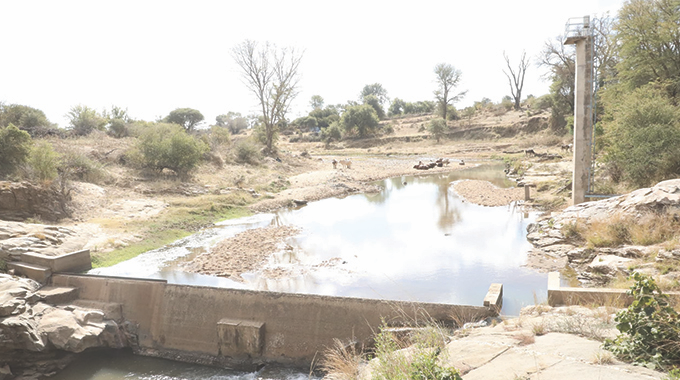
NEGOTIATIONS between Bulawayo City Council (BCC) and the consortium responsible for the US$100 million Bopoma Glassblock Dam project in Matabeleland South Province have been stalled as the two entities fail to agree on the Water Purchase Agreement model.
The proposed construction of Bopoma Glassblock Dam in Matabeleland South Province at an estimated cost of US$100 million through a public-private partnership (PPP) is expected to help address Bulawayo’s water challenges in the short term.
The dam has become the city council’s top priority as a medium-term strategy to secure a reliable water supply for Bulawayo in the coming years.
Bulawayo has been on continuous water shedding for the past couple of years due to the water challenges faced by the city.
Residents are experiencing a water crisis, with the City Council implementing a 130-hour water shedding schedule.
This means residents have access to water for less than two days a week.
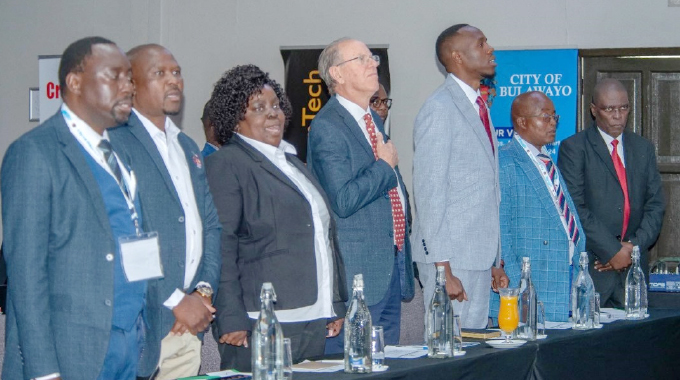
Recently, the city’s Town Clerk, Mr Christopher Dube, was granted authority to negotiate and sign the Water Purchase Agreement with the Glassblock consortium, on the understanding that the use or pay clause will be negotiated so that the Council only pays for water consumed and the supplier can guarantee water quality to an acceptable standard of raw water.
According to the latest council report, the local authority is refusing to accept the use or pay clause, arguing they cannot pay for goods not received.
“While we appreciate the rationale provided by the supplier regarding the ‘take or pay’ provision, there is a need to emphasise that, as a public institution, council has a responsibility to exercise sound financial management and avoid wasteful expenditure.
We recognise the importance of ensuring the bankability of the contract, but we are unable to commit to payments for goods not received, as this would contravene our policy and the Public Finance Management Act.
“This is more so in this case, where these future financial obligations, the terms and conditions of which are not known now and the City would not be party to the same, consequently would not be able to negotiate favourable,” reads the report.
The local authority further noted the requirement for them to take more than their needs to the limits set has the potential to create a serious legacy debt, which the City is not able to assume.
BCC, according to the report, also raised concerns about the potential risks of water supply disruption and contamination.
“While we understand that the supplier will make best efforts to ensure the continuity of supply, we believe that proactive measures should be taken to protect the dam from contamination.
“As the supplier, securing the dam against potential pollution sources is crucial to maintaining the safety and reliability of the water supply.
Therefore, we suggest including explicit clauses in the agreement to establish responsibility for securing the dam,” reads the report.
In responding to the concerns raised by the local authority, the consortium dismissed the issue of the “or pay clause” as merely academic.
“We believe that the concern of the City of Bulawayo of having to pay for water not required from the Glassblock Dam is academic and that the requirement for water by the City of Bulawayo is such that there is no risk of an oversupply of water once the Glassblock Dam and Pipeline have been commissioned and commence supply of water to the Lower Ncema Water Works.
“This is why we are prepared to engage the services of Atchison Actuarial Services Company (Private) Limited in Harare to undertake an actuarial assessment of how the water supplied by the Glassblock Dam will impact on the current supplies and usage of water within Bulawayo to be able to demonstrate to the Bulawayo City Council that there will not be an oversupply of water once water is supplied by the dam upon its completion,” reads the report.
The consortium revealed that a Water Purchase Agreement with the guarantee of the purchase of water is fundamental to the investors and lenders providing finance for the project.
In the absence of such assurance, funding will not be secured.
“Lastly, please be advised that we are finalising plans for Standard Bank and the African Development Bank to travel to Zimbabwe to meet with various entities, including the City of Bulawayo as part of their final due diligence.
It would be hugely beneficial to the Project if we could have the Water Purchase Agreement concluded by the time of that visit,” reads the report.
In debating the matter, Bulawayo councillors noted the need to urgently conclude the negotiations with the consortium so that the project progresses.
“His Worship the Mayor (Councillor David Coltart) emphasised the urgency of the matter and the need for a prompt response. He noted that council was yet to respond to the consortium’s letter 4th July 2025.
He further recalled that in the previous meeting, the consortium had indicated that it would only be able to deliver water that would be paid for.
“In the same meeting, the need to come up with a resolution similar to that of Mtshabezi with regards to water quality had been raised.
There was also the issue of payments in US dollars, which was a concern to Council.
“However, he mentioned that this requirement had since been removed from the contract.
He proposed that the Committee approve the matter, subject to an independent study confirming the volume of water which would be required by the City,” reads the report.
Once complete, the dam will have a holding capacity of 130 million cubic metres and is strategically located at the intersection of Gwanda, Umzingwane and Filabusi districts.
Its construction is expected to be completed within two years. Plans for the dam date back to 1988 but were delayed due to funding and logistical challenges.
The Government is now pushing for its implementation as part of efforts to alleviate Bulawayo’s water shortages.
A 32-kilometre pipeline will connect the dam to the Ncema Dam pump station, facilitating water delivery to Bulawayo.
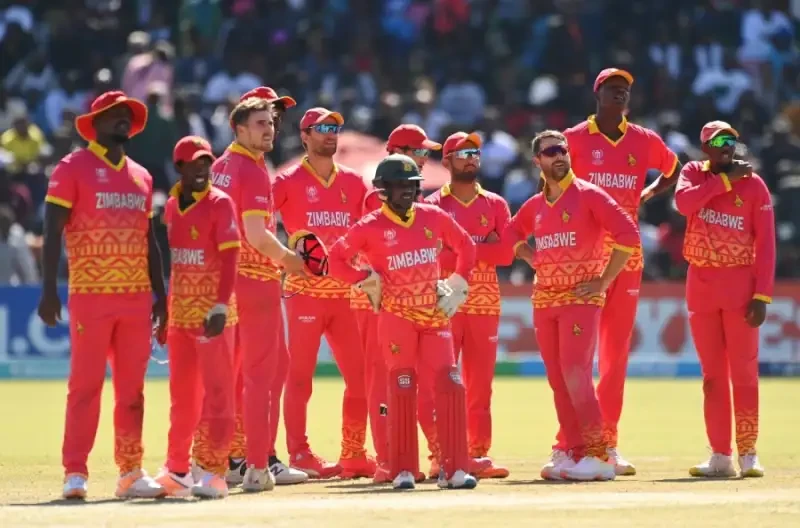
The Zimbabwe Cricket (ZC) this week sank to an all-time low after it accused former Sports minister David Coltart of racism.
Coltart has been critical of ZC after a poor performance by the Chevrons in the red-ball cricket, calling for a rethink to rescue the situation
This drew the ire of ZC which accused the former minister of waging a relentless smear campaign against the association, “targeting its black administrators with baseless accusations lacking any credible evidence”.
ZC said Coltart’s critique was far from constructive criticism, but fuelled by “personal bitterness and racial prejudice, aimed solely at undermining the integrity of selectors and administrators who operate under strict, merit-based and transparent processes”.
The shock attack came after the Chevrons’ dismal performance amid calls by critics to put all hands on deck to halt the slide.
The attack also came after Chevrons’ coach Justin Sammons admitted that some of the players lacked the drive and were not willing to take body blows for the sake of the team.
The team’s recent two-match Test series against New Zealand ended with a historic low — a 2-0 whitewash capped by an innings and 359-run defeat at Queens Sports Club.
The loss was Zimbabwe’s worst-ever in Test cricket, with their batsmen failing to score even 200 runs in any of their four innings.
This follows a difficult period of Test matches against England and South Africa, which also resulted in heavy defeats.
In situations like these, there ought to be a roundtable of stakeholders to map the way forward.
However, ZC appeared to have missed that, resorting to the race card.
Fans demand better from the team and expect administrators charged with superintending over the game to put in place a conducive environment for cricket teams to thrive.
They also expect administrators to take criticism for the betterment of the game.
Administrators who don’t want criticism are not there for the interest of the sport, but for selfish gains.
Coltart, like all the neutrals, is worried why teams playing Zimbabwe are consistently breaking records, a testament to the lack of resistance offered.
There have been questions about whether Zimbabwe is ready for Test cricket, given the poor outing. There have also been questions on the selection process, with a fan petitioning the Sports and Recreation Commission to investigate the alleged bias in team selection.
These are genuine questions that demand answers.Yet, ZC is seeking refuge in the race card.
The conversations so far show that ZC’s statement has found no takers.
Neutrals have refused to swallow it hook, line, and sinker. ZC must go back to the drawing board and chart a new course.
The starting point for ZC is to admit that results are not coming the team’s way, to be able to diagnose the problem.
ZC administrators must be reminded that when you are in a hole, you must stop digging.
Statement of Senator David Coltart regarding Zimbabwe Cricket
I have noted the statement issued by Zimbabwe Cricket on the 12th August 2025 titled “ZC Condemns Coltart’s Smear Campaign”.
The remarkable backlash from Zimbabwean cricket supporters against ZC’s statement suggests that Zimbabweans are not fooled and that the criticism that I (and many others) have leveled against ZC is not a “smear campaign” but rather the genuine concerns of many Zimbabwean cricket supporters from all walks of life.
Nevertheless, I feel it necessary to issue a statement particularly to respond to Zimbabwe Cricket’s invitation made in their statement to “present concrete, factual evidence to support” the criticism of ZC.
At the outset I must express regret at the tone of the Zimbabwe Cricket statement which is akin to something I would expect from a political party, not a national sports body.
It is a shockingly mendacious document which distorts the truth and which, in the words of Advocate Fadzayi Mahere, reduces an “important national discourse to an hominem racist attack”.
I do not intend to defend myself against the racist attack; my record in Zimbabwe since I returned in 1983 speaks for itself and I am deeply heartened by the overwhelming support given by Zimbabweans across the racial and ethnic divide since the statement was issued.
It is clear to me that Zimbabwe Cricket have used a cheap shot, namely racist allegations, to try and deflect national debate regarding the deep rooted rot and malaise in cricket administration at present–and that the general public has seen through it.
With regard to the allegation that I have been involved in “divisive interference of cricket” a few facts need to be stated:
1. I did not play a “key role in planning” Henry Olonga and Andy Flower’s 2003 black-armband protest.
The facts are that they planned the protest and only sought advice from me regarding their statement issued at the time.
Both Henry Olonga’s book and numerous statements made since then by both men confirm this.
If anything my advice was that they protest in a way that would not disrupt the World Cup.
It is in fact demeaning to these two cricket legends that it even be suggested that they didn’t have minds of their own and that I played a key role in planning their protest.
As for their protest being “infamous” the fact is that their brave, selfless (both of them willingly forfeited their remaining international cricket playing careers), non partisan and peaceful protest was widely lauded throughout the cricketing world.
Andy Flower has gone on to be one of the most sought after coaches in the world and has taken England cricket and, this year, the Royal Challengers Bangalore to unprecedented heights.
Henry Olonga remains one of the most deeply respected cricketing icons in the world.
2. The Zimbabwe Cricket statement alleges that “thanks to pressure from Coltart England refused to travel to Harare for their World Cup match, triggering a long-lasting diplomatic and sporting rift”.
This is a total distortion of the truth. During the World Cup I met with the England team in Cape Town and tried to persuade them to play against Zimbabwe in Zimbabwe but failed.
The reference in the ZC statement to the article which was published by the Daily Telegraph on 31st December 2002 alleging “that I argued against the ICC’s principle of separating sport and politics” is also a distortion of what I wrote.
I succeeded with Ireland, Australia, and New Zealand but failed in England and Scotland, once again due to pressure from the British government.
All the details of these efforts are clearly laid out at pages 512 to 514 of my book.
None of what is written there has ever been refuted because it is all true and supported by independently verifiable sources.
3. The statement about the role I played recently in the UK at the time of the Trent Bridge test match is entirely false and misleading.
My interviews with Michael Atherton and other cricketing journalists were made in the context of Bulawayo being awarded the right to host the 2027 Street Children Cricket World Cup.
I was then – and remain – entirely supportive of Zimbabwe’s resumption of cricket relations with England, something I have consistently argued for.
Turning to the invitation to provide concrete, factual evidence to support my recent social media criticism of Zimbabwe Cricket I make the following points.
Indeed the ZC statement provides a useful opportunity for me to collate and expand upon criticism I have made through social media for the last few years.
1. I am deeply concerned by the state of cricket at grassroots level particularly Government schools.
From my perspective in Bulawayo, it is clear to me that facilities at schools like Milton and Plumtree (schools which have produced cricketing greats such as Henry Olonga and Pom Mbangwa) are at an all time low.
I don’t know how our young cricketers at these schools manage to continue playing cricket given the state of their fields and nets.
I suspect that save for a couple of schools in Harare the same applies countrywide.
The collapse of cricket in these schools is reflected in the fact that very few players are coming through the system.
I see little evidence of Zimbabwe Cricket pouring resources into Government schools countrywide.
Without this financial commitment the pool from which we draw future stars will continue to dry up with catastrophic consequences for the future.
The recent poor performance of the Under 19 team against Bangladesh and South Africa may be a reflection of this failure.
2. It appears that there is a conscious decision by Zimbabwe Cricket to promote cricket in Harare but little elsewhere.
This is reflected in nearly all T20 and ODI matches being played in Harare, selectors solely coming from Harare, substantial investment in academies in Harare but little elsewhere.
It is hard for young people in particular to be able to attend 5 day Tests and that is why it is important to give youngsters the opportunity right across the country to watch T20 and ODI matches.
It is also increasingly reflected in the composition of National teams with almost all the players selected coming from Harare.
All but one player in the current senior men’s team come from Harare. All but two players in the current men’s Under 19 team come from Harare and its environs.
Is it really the case that the rest of the country isn’t producing players of international quality?
Cricket is a national game and we can only compete well internationally if we promote the game fairly right across Zimbabwe.
I need to stress that this goes beyond just Bulawayo. Other major cricketing centers like Kwekwe, Mutare, Gweru and Masvingo need to be supported.
Whilst only Bulawayo and Harare have Test venues there is no reason why T20 games in particular cannot be played elsewhere.
Likewise there needs to be an equitable distribution of funds to smaller centers to promote the game across the country.
3. The only other major investment outside of Harare by ZC is the construction of a cricket stadium costing millions of dollars in Victoria Falls which in my view at this juncture is a misplaced budgetary priority.
Victoria Falls is a small tourist town with a tiny cricket supporting population. The development of this boutique stadium is unprecedented world wide.
In every other Test playing nation the primary investment by their Boards has been to invest in existing stadia in large population centers right across their countries.
It must be clear that this stadium is not primarily part of an objective to take the game to smaller centers to promote the game.
It appears to be mainly to have a stadium in a tourist center to attract foreign teams who will come for reasons beyond the sole purpose of playing cricket.
Whilst this may be admirable if the financial health of ZC was good it is a terrible misplaced budgetary priority given the fact that cricket venues in cities across the country outside of Harare are collapsing and there is, as stated above, a near total collapse of cricketing facilities at most Government schools countrywide.
Unless we focus on the development of grassroots cricket and the game right across the country our ability to play the game well at international level will continue to erode and ultimately the Victoria Falls stadium will become a white elephant.
4. The issue which appears to have excited the most hostility from ZC – selection – is one which I have been concerned about from the time when I was Minister of Sport.
At the time I issued a directive that national selection panels for all sporting disciplines should be comprised of former international players from across the country.
When I issued the directive it was only Cricket Zimbabwe who expressed concern and all sorts of aspersions were directed my way by Cricket Zimbabwe then.
In other words no other sporting discipline had any problem with the directive.
My view is that ZC selection procedures and policies have become even more problematic since the directive was issued back in 2012. At present the selectors only come from Harare.
This is in marked contrast to, for example, BCCI’s policies who have selectors from across India, most of whom are iconic former players. The BCCI policy ensures that talent right across India is identified.
The ZC statement alleges that I am only concerned about white players but that is another brazen untruth.
Whilst I have alleged that there is an unwritten quota, that quota relates to race, ethnicity, region and club.
Inexplicably black and white players who have, for example, performed the best in some of national tournaments such as our T20 tournament, have been excluded from our national teams.
There is a disproportionate number of players who come from Harare itself and one club in particular, namely Takashinga.
The result has been that on a purely objective statistical basis we have not been selecting our best players across all formats.
Related to this is an apparent reluctance to select Zimbabwean players who are currently playing overseas.
5. In the last few years I have received numerous reports of a toxic atmosphere in many teams, particularly the national team. Players have reported being treated poorly in a variety of respects.
Some players have been openly intimidated by management and certain coaches.
I am deliberately not going to go into detail so as to protect players, but these complaints have been made on numerous occasions over years by numerous players right across the racial divide.
I need to stress that this conduct is not limited to the senior national team but includes shocking conduct directed towards some black Under-19 players.
Whilst I cannot of course verify all these reports they are so numerous as to be credible and their repetition and content give them a distinct ring of truth.
On the field of play it is obvious to anyone with eyes that our teams are dejected and play with little fight.
That is emblematic of an unhappy team which goes beyond their poor performance on the field. It is a symptom of a much deeper malaise.
6. The composition of the Zimbabwe Cricket Board is also a matter of deep concern. There is not a single member of the Board who has played First Class Cricket. This is in marked contrast to nearly every other Test playing nations’ Boards.
The recent outgoing Chair of BCCI Roger Binny was a key member of India’s 1983 World Cup winning team.
Md Aminul Islam, the President of Bangladesh Cricket Board, was a former Bangladesh Captain and the country’s first Test centurion.
As far as I can see every other Test nation Board has at least one prominent former player on its Board.
In other words in other Boards there are key people who have a deep understanding of the game.
Election procedures for the ZC Board are opaque and it is difficult for people outside of the current leadership to get elected.
The result is that it appears that ZC is in fact run by a small unrepresentative clique with little understanding of or passion for cricket, who self perpetuate their tenure.
There has been very little turn over in actual management of ZC for at least a decade. My view is that the Board is at the root of the current malaise.
Zimbabwe Cricket desperately needs a more representative Board which includes leading former national players who demonstrate a passion for the game and administrative prowess.
If these comments were made in the context of improving performance on the field of play they could be easily dismissed.
However it is clear to all objective observers that Zimbabwe Cricket is in a dire and declining state.
Virtually all our teams have suffered humiliating defeats in all formats in the last few years and we now even battle to qualify for World Cups.
The recent poor performance by our Under 19 team against South Africa and Bangladesh is perhaps the most worrying sign of a deep rooted malaise in our national game.
I want to make clear that I stand fully behind the players. The blame must lie with ZC.
Ironically the politically charged statement issued against me, which seeks to deflect criticism, is in itself the surest sign that there is something badly wrong in Zimbabwe Cricket.
The views expressed here are not my own – they are widely shared by thousands of cricket supporters of all races right across Zimbabwe.
If these concerns are not addressed, cricket in Zimbabwe will continue to decline.
If, instead of attacking those who raise concerns, ZC addresses these concerns, then I believe cricket will flourish in Zimbabwe and our players and supporters will be the biggest beneficiaries.
Senator David Coltart
Bulawayo
14th August 2025
This is in response to the statement below issued by Zimbabwe Cricket
For too long, David Coltart has waged a relentless smear campaign against Zimbabwe Cricket (ZC), targeting its black administrators with baseless accusations lacking any credible evidence.
It is time to call his bluff and expose his agenda for what it truly is.
Coltart’s frequent social media tirades – disguised as the voice of “concerned cricket lovers” – in reality propagate a deeply divisive and damaging narrative.
His rhetoric threatens the unity and progress that ZC has painstakingly built over many years.
Far from offering constructive criticism, his attacks are fuelled by personal bitterness and racial prejudice, aimed solely at undermining the integrity of selectors and administrators who operate under strict, merit-based and transparent processes.
While selection is inherently subjective and globally sparks healthy debate among cricket fans, that is normal and part of the game.
However, Coltart’s persistent claims of non-existent racist policies are both dangerous and deplorable.
Such accusations distract from the real work of developing Zimbabwean cricket and erode public trust in a fair, transparent system.
We challenge Coltart to abandon his hollow posts and present concrete, factual evidence to support his claims.
Without proof, his accusations amount to bar talk – empty noise unworthy of serious consideration but too dangerous to ignore given his political standing and influence.
To understand the gravity of Coltart’s attempts to destabilise ZC, one must appreciate the complex legacy of cricket in Zimbabwe.
Introduced in 1890 by the Pioneer Column during a segregated colonial era, cricket was long the preserve of the white minority.
It was not until 1995 – more than a century later – that a black player represented Zimbabwe at the national level.
This history of exclusion is a stain that ZC unequivocally rejects.
Since independence in 1980, racial relations in Zimbabwe have come a remarkable distance.
In recent years, ZC’s transformation drive has made national, provincial and club teams more representative of the country’s demographics.
The commitment to this integration policy – meant to grow cricket and keep it strong – helped Zimbabwe become a full member of the International Cricket Council (ICC) in 1992.
We are proud of these achievements and remain committed to selecting only the best players – regardless of skin colour – to represent our national teams.
There is absolutely no place for racial prejudice in our game.
The ICC Anti-Discrimination Code prohibits conduct “likely to offend, insult, humiliate, intimidate, threaten, disparage or vilify any reasonable person . . . on the basis of their race, religion, culture, colour, descent, national or ethnic origin”.
ZC’s compliance with this policy is absolute and non-negotiable.
Discrimination in team selection, administration or any aspect of our operations will never be tolerated.
This stands in stark contrast to Coltart’s own record.
His tenure as Minister of Sport was marked by divisive interference and politicisation of cricket.
In fact, his politicisation of the sport dates back to the 2003 ICC Men’s Cricket World Cup, co-hosted by Zimbabwe.
In a Daily Telegraph opinion piece on 31 December 2002 titled ‘Politics has no place in sport – so boycott the World Cup’, Coltart argued against the ICC’s principle of separating sport and politics.
In the lead-up to the tournament, he met with players Andy Flower and Henry Olonga and played a key role in planning the infamous black-armband protest.
Thanks to pressure from Coltart and his ilk, England refused to travel to Harare for their World Cup match, triggering a long-lasting diplomatic and sporting rift.
For 23 years, England froze bilateral cricket relations with Zimbabwe – a freeze that only ended in May 2025, when the current ZC administration successfully negotiated a historic one-off Test at Trent Bridge.
This achievement is the result of years of patient diplomacy and bridge-building by ZC.
Yet Coltart shamelessly presents himself as a champion of Zimbabwe cricket in light of this milestone.
During the national team’s recent tour to England, he thrust himself into the media spotlight, offering interviews and commentary to portray himself as a saviour, while conveniently ignoring his role in the crises that crippled Zimbabwe cricket for decades.
The irony is profound: Coltart, a former officer in the Rhodesian police – an institution notorious for oppressing black Zimbabweans – now poses as a white liberal messiah, spreading a toxic, race-obsessed narrative that sows division rather than healing.
In 2018, he publicly acknowledged his past role and expressed regret for supporting an unjust system that discriminated against black people.
Yet his ongoing social media campaign betrays a lack of true repentance.
His selective outrage reveals his agenda: he protests only when white players are overlooked but remains silent when black players miss out on national team selection.
He also celebrates only cricket milestones by white players.
While this is his prerogative, it exposes his “concerns” as a façade for a racial agenda – not the best interests of Zimbabwean cricket.
The progress ZC has made speaks louder than Coltart’s bitter diatribes.
Organising high-profile tours, including recent Test series against South Africa and New Zealand in Coltart’s own mayoral backyard of Bulawayo, alongside full compliance with ICC’s Anti-Discrimination Code, are milestones achieved through the dedication of players, administrators and coaches committed to excellence and unity.
ZC rejects division. We reject politicisation. And we categorically reject Coltart’s cynical campaign to destabilise the sport.
We call on the cricketing community and the public to see through Coltart’s charade and stand firmly with Zimbabwean cricket as we build a future founded on unity, fairness and sporting excellence.
Our cricket is a shared heritage belonging to every Zimbabwean who plays, supports and loves the game, not to divisive politicians clinging to a bitter past.
The government has vowed to dismantle powerful cartels extorting vendors in Bulawayo’s Central Business District, where illegal syndicates are reportedly collecting as much as US$30,000 per day from informal traders operating along 5th and 6th Avenues.
The revelations came during the second leg of the Ministry of Local Government and Public Works’ engagement with urban councils, held in Bulawayo this Friday. The meeting follows growing concern over rampant illegal vending operations and alleged corruption involving informal trading spaces.
Minister of Local Government and Public Works, Honourable Daniel Garwe, confirmed that the government has identified four key cartels controlling large sections of the vending space and said urgent action is being taken to dismantle the operations.
“We know Bulawayo has red-marked areas of major concern, particularly Fifth Avenue and Sixth Street, which have become havens for illicit deals,” said Minister Garwe. “There are about four categories of individuals collecting money from innocent vendors to the tune of US$30,000 per day. We are going to stop that. We will speak to the ZRP and urge local authorities to deploy them as a matter of urgency.”
The government is reportedly working in close collaboration with the Zimbabwe Republic Police and local authorities to restore order and protect legitimate vendors from exploitation. Garwe also revealed that the government is embracing privatisation strategies to boost service delivery within urban councils, many of which have struggled to manage informal trading.
Bulawayo Mayor Councillor David Coltart expressed strong support for government intervention, emphasizing the need to create safe, well-regulated trading environments for vendors.
“Our dream is to create attractive places. We need to provide good spaces for vendors, whether in winter or summer. We have properly demarcated bays, and with proper enforcement, we can allocate bays to individuals so that they pay and are under the protection of the council. If vendors work with us and the police, it’s a win-win,” Coltart said.
He stressed the importance of transparency and accountability, noting that properly registered vendors would also help the city keep accurate records and improve overall service provision.
The meeting comes in the wake of President Emmerson Mnangagwa’s launch of two key governance tools in June — the Minimum Service Delivery Standards Framework and the Urban State Land Management Policy — both aimed at improving local government operations and curbing illegal land and space allocations in urban areas.
As the government intensifies its efforts to formalise informal trade, many hope the crackdown will not only protect vulnerable vendors from criminal networks but also bring much-needed order to Bulawayo’s CBD, which has long suffered from congestion, lawlessness, and unregulated vending activities.
BULAWAYO City Council (BCC), in partnership with Enock Construction and Earth Moving Equipment, will on Friday commission 650 fully serviced stands in Mahatshula East suburb, marking the final phase of a major housing development project.
The initiative is expected to ease the city’s ballooning housing backlog, which currently stands at more than 125 000 applicants, while promoting sustainable urban growth. Last year, 115 stands were commissioned as part of the same project.
Speaking at the commissioning ceremony, Bulawayo mayor Councillor David Coltart praised the collaboration between BCC and its private sector partners, describing it as a model for effective housing delivery.
“We are always happy when we partner with private developers to commission the stands as they are a testament that the city’s initiative of public-private partnerships in housing development is yielding good results,” Clr Coltart said.
He reaffirmed the city’s vision to provide quality housing that improves residents’ quality of life and fosters pride in their communities.
In addition to expanding housing access, BCC is exploring innovative, climate-resilient construction technologies to enhance the sustainability of future housing projects in line with global best practices.
City councillors remain deeply divided on how to handle the stalled Egodini Mall redevelopment, as frustrations mount among residents over continued delays and traffic congestion attributed to the failed project.
During a heated full council meeting, some councillors pushed to extend the contract with Terracotta Trading (Pvt) Ltd by another 24 months to allow completion. However, others called for outright cancellation of the contract, citing the contractor’s incompetence and failure to deliver on commitments.
Mayor Councillor David Coltart urged caution, recommending that the matter be referred to the relevant committee for further review before any decision.
“It’s inappropriate to cancel the contract without gathering all the facts. We need to meet the contractor to understand their perspective on the matter,” Clr Coltart said.
He stressed the importance of hearing both sides before resolving the issue, drawing on his experience as a lawyer.
Deputy Mayor Councillor Edwin Ndlovu agreed, warning that premature action could trigger costly legal battles.
“This is a contractual issue. We would rather engage with the contractor and understand where the problem lies. Let’s be practical and logical,” Clr Ndlovu stated.
The Egodini redevelopment, once hailed as a transformative initiative for Bulawayo, has now become a symbol of stalled progress. Closed in 2016 to make way for a modern shopping complex and integrated bus terminus, the project has barely moved forward in nearly a decade.
Only Phase One, a basic taxi rank serving the western suburbs, has been completed. The mall and other key components remain in limbo, drawing criticism from residents, civic groups, and informal traders who blame the delays for worsening city center congestion and disorder.
Terracotta was awarded the contract with a bid of nearly US$60 million, far exceeding competing bids of US$30 million and US$3 million. Last month, the contractor shocked the council by proposing to slash its investment to US$10.5 million, triggering alarm among officials.
In response to ongoing concerns, the council extended the contract termination notice from mid-June to September 12, 2025, providing more time for negotiations.
In a bid to revive the project, Terracotta revealed a partnership with local firm Better Brands Construction, signing a Memorandum of Understanding aimed at facilitating completion.
However, city officials have demanded a comprehensive implementation plan from the consortium, including detailed designs, cost estimates, and a performance bond from a reputable local bank. The technical team insists priority be given to anchor shops, food outlets, supermarkets, and the bus rank to stimulate commercial activity and improve commuter flow.
Chamber Secretary Mrs Sikhangele Zhou expressed serious concerns about the proposed budget reduction, warning it threatens the quality and original vision of the project.
Town Clerk Mr Christopher Dube echoed these sentiments, calling the drastic cut an implicit admission of failure by the contractor.
As the debate continues, residents and stakeholders await a clear path forward to end years of uncertainty surrounding the Egodini Mall redevelopment, which remains a key urban development priority for Bulawayo.
BULAWAYO City Council showcased a wide array of lucrative investment opportunities within the metropolitan province and its surrounding areas during the inaugural Khumbul’ekhaya Investment Conference (KIC), held in Harare on Wednesday.
The conference aimed to attract potential investors — particularly those from the city’s designated “diaspora community”, including Harare-based individuals — to seize the promising opportunities available in the metropolis and contribute to its development.
The local authority’s efforts align with its broader development aspirations, underpinned by the Second Republic’s national development philosophy, “Nyika inovakwa nevene vayo / ilizwe lakhiwa ngabanikazi balo”, which emphasises that only a nation’s citizens can build their own country.
By highlighting the city’s investment potential, Bulawayo City Council hopes to stimulate economic growth, drive development, and support the re-industrialisation of the city.
Among the key investment opportunities presented at the conference was the establishment of waste-to-energy projects, which would enable the city to manage solid waste sustainably while generating power.
The council is also seeking investors to develop solar farms to ensure a stable energy supply for local industries. A major investment prospect is the proposed construction of a US$150 million industrial park at Umvumila, with 188 hectares of land already allocated. This project has the potential to attract new businesses and create employment opportunities for local communities.
The city is also inviting investment in the renovation and construction of sporting facilities, including football stadiums, to complement existing venues such as Barbourfields Stadium. Additionally, the council is seeking partners to rehabilitate old roads and construct new highways to ease congestion.
In terms of water infrastructure, Bulawayo is looking to attract investment in dam construction — such as the proposed Glassblock Dam — to address persistent water shortages and reduce reliance on the Zimbabwe National Water Authority.
Other opportunities include the regeneration of historic suburbs like Makokoba and the renewal of city bus termini, aimed at revitalising these areas.
These long-term projects require substantial funding, prompting the council to target pension funds and seek partnerships with major financial institutions such as the Insurance and Pensions Commission, the National Social Security Authority (Nssa) and the Infrastructure Development Bank of Zimbabwe.
“We’ve observed that many people originally from Bulawayo, or who have long-standing ties to the city, are now thriving in Harare. So, we came to showcase some of the investment opportunities available back home,” said Bulawayo City Council Economic Development Officer, Mr Kholisani Moyo, during his presentation.
Mr Moyo highlighted that Bulawayo offers promising opportunities in housing, driven by a significant backlog. The city plans to construct flats and smart homes for low-income residents and is seeking land developers to partner in land servicing and construction.
The city also aims to boost tourism by developing high-end accommodation, including a five-star hotel, lodges and family-friendly entertainment facilities.
Additionally, it seeks to promote sports tourism by building modern stadiums for football, rugby and tennis, which would attract visitors and enhance the city’s tourism appeal.
Speaking at the same event, Deputy Minister of Local Government and Public Works, Albert Mavhunga, urged local authorities across the country to develop strategies that attract investment from diaspora communities and international partners.
“The inaugural Khumbul’ekhaya Diaspora Investment Conference exemplifies our commitment to harnessing the potential of our diaspora communities. I encourage other local authorities to emulate these efforts and explore investment opportunities that can attract both diaspora and international partners.
“Let us foster an environment where investment flows freely from local to global, fuelling our development goals. United in purpose and action, we can realise a prosperous future for our cities, our country, and our continent,” he said.
Bulawayo Mayor, Councillor David Coltart, echoed this sentiment, stating that the city holds immense potential and that his administration is committed to restoring Bulawayo to its former glory.
“The city possesses tremendous potential, and this administration is determined to restore it to its former glory, making it a thriving metropolis once more,” said Clr Coltart.
The event was attended by corporate entities and Government agencies. Notable attendees included CBZ Holdings, TN CyberTech, BancABC, Mr Sinkwa and Ingwebu Breweries.
Government agencies present included the Zimbabwe Revenue Authority (Zimra), Zimbabwe Energy Regulatory Authority (Zera), Procurement Regulatory Authority of Zimbabwe (Praz), and Nssa.
Ultimately, the Khumbul’ekhaya Investment Conference served as a vital platform for Bulawayo City Council to showcase the metropolitan province’s vast potential and attract a diverse range of investors to support its development agenda.
With a broad spectrum of investment opportunities on offer, Bulawayo is poised for growth and is eager to partner with investors to realise its vision.
According to the City of Bulawayo, the programme will be extended to South Africa and the United Kingdom, where a significant portion of the Bulawayo diaspora resides.
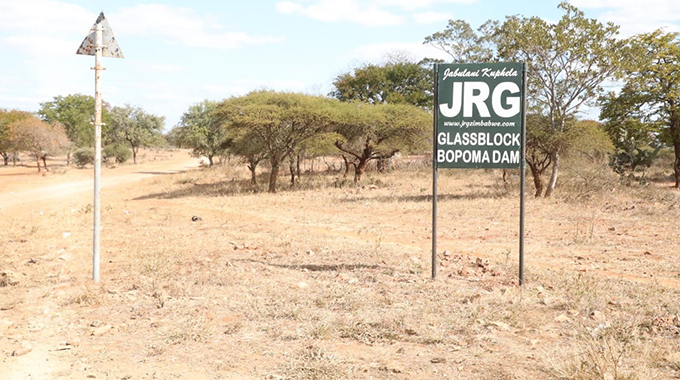
THE contractor behind the construction of the US$98 million Bopoma Glassblock Dam in Insiza, Matabeleland South, has moved on site to undertake preliminary works, paving the way for full-scale project implementation.
The giant water body will be situated in the Upper Umzingwane Catchment Area in Matabeleland South Province and is touted as a medium-term solution to Bulawayo’s water challenges.
Strategically located at the confluence of Gwanda, Umzingwane and Filabusi districts, construction is expected to be completed within three years and will be undertaken by JR Goddard Contracting Pvt (Ltd).
Estimates suggest the project could start holding water by December 2026 and has a full capacity of 129 million cubic metres with a daily yield of about 68 megalitres.
Once complete, the water body would be the second-largest city’s supply dam after Insiza Dam, which has a capacity of 173 million cubic metres and a daily yield of 46 megalitres.
Latest updates indicate that full-scale construction could commence soon once the imminent financial closure with international funders is secured.
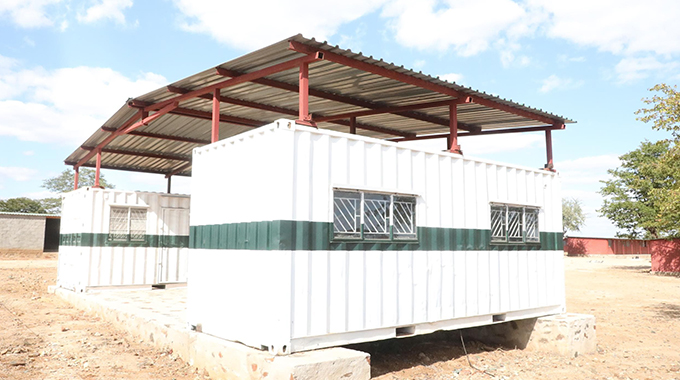
The Zimpapers news crew visited the dam site on Tuesday and found the contractor on the ground with finished accommodation cabins to house workers, and office spaces with newly installed fuel tanks and other critical support infrastructure.
A large area where the dam will be constructed has also been cleared. Bulawayo Mayor, Councillor David Coltart, said preparations for the commencement of works were now at an advanced stage and that funding for the massive project had already been secured from a range of financiers.
“The contractor is already on the ground, has cleared the land for the dam site and construction is expected to start as soon as the Water Off-Take Purchase Agreement has been concluded,” he said.
“We expect the works to begin when the financial arrangements have been concluded with the international finance institutions,” said Clr Coltart.
He assured stakeholders that full-scale construction of the dam is expected during the third or fourth quarter of this year and that funding for the massive project had already been secured.
“In December last year, at the Africa Investment Forum in Morocco, representatives of Government, Zida (Zimbabwe Investment and Development Agency), the consortium, and the city council, including myself, attended and lobbied for financing,” said Clr Coltart.
“Dr Anxious Masuka (Minister of Lands, Agriculture, Water, Fisheries and Rural Development), on behalf of Government, agreed that the consortium can have a 20 to 25-year servitude over the dam site and agreed that the Water Off-Take Purchase Agreement, which underpins the financial arrangements, shall be between the consortium and the Bulawayo City Council.”
Mr James Ross Goddard, who leads the contracted firm, told an investment Indaba in April that the dam will be 70 percent the size of Insiza Dam.
“The dam will store 129 million cubic metres of water, which is about 70 percent of Insiza Dam’s capacity, and will meet Bulawayo’s water demand until 2054, covering the next 30 years,” said Mr Goddard.
He said financing for the project will primarily come from Standard Bank of South Africa and the African Development Bank, with other financiers contributing US$13 million of the US$93 million required for the project.
“Standard Bank of South Africa has committed US$50 million towards the dam’s construction, while US$30 million will be provided by the African Development Bank. The remaining US$13 million will come from various smaller organisations and financiers,” he said.
On site, the news crew observed that a huge chunk of land has already been cleared and the construction of accommodation for hundreds of workers is complete.
Engineers have also marked with white paint the area where the dam wall will supposedly be constructed. Locals are ecstatic about the possibility of being offered jobs when construction resumes.
“We were told by the headman and village heads that the contractor has promised that locals will be given first preference when they start hiring.
“I think it’s a good thing that menial jobs are given to local villagers, only specialised jobs are offered to people from outside who have the skills,” said Mr Amkela Mpofu, a local villager at Gankabezi Village.
Businesses are also optimistic of reaping rich pickings from the human traffic that will be at the dam site. “I expect to make money from my grocery shop for the three years that it will take for the dam to be constructed and completed. The hundreds of construction workers at the dam site will buy food and other necessities from the local shops,” said shop owner, Mrs Thandolwenkosi Sibiya.
The Bulawayo City Council has concluded citywide consultations with residents and other stakeholders regarding the feasibility of purchasing raw water from the proposed dam.
The Ministry of Lands, Agriculture, Water, Fisheries and Rural Development awarded the tender to JR Goddard Contracting in 2019, under the Build, Operate and Transfer (BOT) arrangement.
Under the agreement, the city will pay US$0,90 per cubic metre for raw water during the first 10 years of the repayment period. The cost will drop to US$0,70 per cubic metre for the subsequent 15 years.
In comparison, BCC pays US$0,29 per cubic metre for water from the Mtshabezi Dam and US$0,51 from the Nyamandlovu Aquifer. The cost of treated water for residents will rise by US$0,16 per kilolitre (1000 litres), increasing the tariff from US$1,22 to US$1,38 per kilolitre.
BULAWAYO Mayor, Councillor David Coltart, is leading a high-level council delegation to Osaka, Japan, to participate in the Japan Clean City Initiative (JCCI) and the Mayoral Alliance Expo 2025.
Mayor Coltart is also attending the Zimbabwe-Japan Business Forum, which is being headlined by President Mnangagwa today.
According to the latest council report, Bulawayo Town Clerk Mr Christopher Dube informed councillors that the local authority had received formal communication from the Ministry of Local Government and Public Works. “We are in receipt of information regarding possibilities of establishment of twinning arrangements between towns and cities in Japan with their counterparts in Zimbabwe,” reads part of a letter dated 15
May 2025 from the Permanent Secretary for Local Government and Public Works, Dr John Basera.
The correspondence urged local authorities to identify potential areas of cooperation and submit draft Memorandums of Understanding (MOUs) to facilitate the processing of twinning arrangements. “Local authorities are encouraged to identify areas they would need to establish twinning arrangements and submit in an MOU format to ease processing,” the letter further stated.
It was also noted that local authorities willing and financially able to attend the Mayoral Alliance Expo should submit proposed MOUs outlining possible areas of cooperation.
The Mayoral Alliance Expo is a network of 650 local governments across Japan established to promote regional culture and development through the 2025 World Exposition.
It aims to support regional growth, encourage innovation in communities, foster collaboration with various industries, and engage governments, businesses and civil society in pursuit of shared development goals. “As indicated, local authorities who can afford and are keen to establish twinning arrangements with Japanese cities/towns and also participate in Clean City Initiatives should quickly indicate their willingness and commitment to participate at the Mayoral Alliance Expo,” the letter added.
The Bulawayo City Council resolved to authorise Mayor Coltart to travel with Deputy Mayor and Focal Person for Twinning, Councillor Edwin Ndlovu, Chamber Secretary, Mrs Sikhangele Zhou, City Economic Development Officer, Mr Kholisani Moyo, Cleansing Superintendent, Mr Nkanyiso Moyo, and Principal Town Planner, Ms Nolwazi Ncube.
The visit is expected to unlock new avenues of international cooperation and knowledge-sharing in areas such as urban development, clean city strategies, and sustainable economic growth.
Bulawayo mayor David Coltart has called on members of the Rotary Club in Zimbabwe to become a moral compass for the nation, urging them to uphold truth, peace and ethical leadership in the face of national decay and a weakened justice system.
Speaking at the Rotary Club of Bulawayo presidential induction dinner held recently at the Zimbabwe International Trade Fair, Coltart challenged Rotarians to embody the principles of the organisation and defend values that can help rebuild Zimbabwe’s social and moral fabric.
“The Four-Way Test was created in 1932. These four principles raise profound questions and they provide our nation with the guide which we are desperately in need of,” Coltart said.
He emphasised the importance of truth as the foundation for both city and nation-building, pointing to the deterioration of the justice system as evidence of the country’s moral crisis.
“Those of you who are lawyers know how our justice system has been terribly undermined. We do not place value in truth right across our nation,” he said. “You play an important role in being a non-partisan organisation and that gives me an opportunity to restate how critically important truth is in building any city or nation.”
Coltart encouraged the Rotary community to speak out against dishonest practices in business and governance, while remaining non-partisan and focused on upholding universal ethical standards.
“Where there is no truth, the moral fabric of the country is destroyed and ultimately the country itself is destroyed,” he warned. “I urge you to maintain the highest standards regarding truth and where you see untruths in business practices, speak out – not in a partisan way, but in defence of these principles which we know are correct.”
Highlighting Rotary’s core focus areas – including peacebuilding, healthcare, education, water and sanitation – Coltart praised the club’s alignment with the pressing needs of the city and nation.
“I am told that you have certain areas of focus such as promoting peace, disease prevention and treatment, water and sanitation, maternal and child health, basic education, community development and environmental protection,” he said. “My goodness, we need peace in our nation and in the world.”
During the event, five new Rotary Club presidents were inducted: Nonhlanhla Mguni (Bulawayo South), Marlvin Bill (Belmont), Alex Mandovha (Sunrise), Gladys Bugalo (Bulawayo), and Bongiwe Ngwenya (Matopos Rotary Club).
The Rotary Club, a global non-partisan service organisation, brings together professionals and community leaders across generations with a shared mission of creating lasting change in their communities and around the world.